PiDP-10 | #MagPiMonday
Oscar Vermeulen is back with his most ambitious retro kit yet. This #MagPiMonday, PJ Evans returns to the space age.
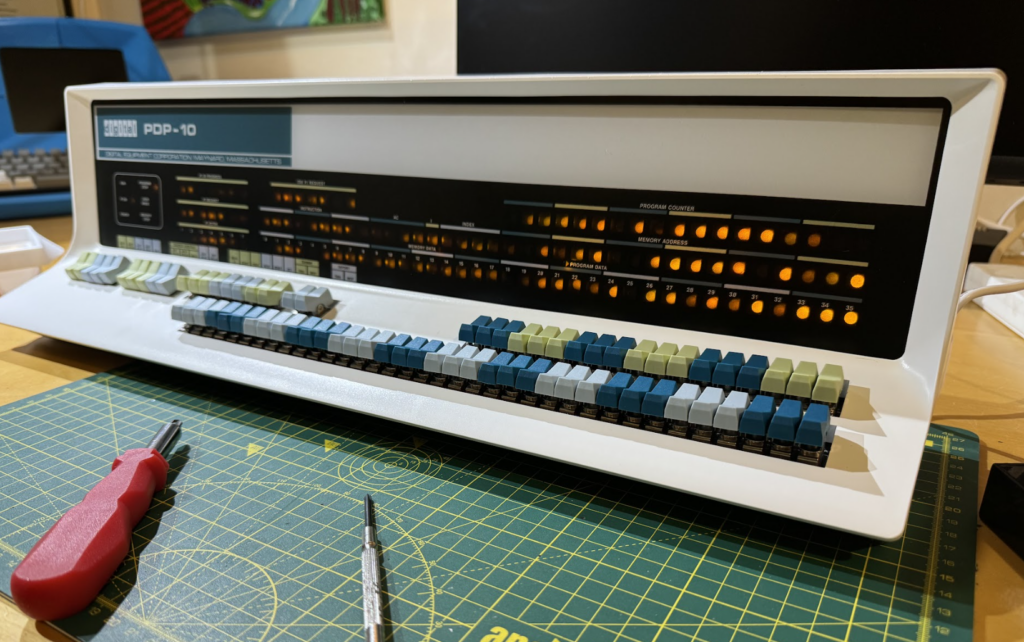
Following on from his original PiDP-8 kit and the beautiful PiDP-11 Oscar Vermeulen now presents his latest DEC computer recreation: The PiDP-10. Despite the plaudits for his first two kits, Oscar has not rested on his laurels and this new offering is a bit special, not only for the history behind it, but also the sheer ambition of the recreation.

The original PDP-10, of which this is a two-thirds scale reproduction, found a place in the legend and folklore of early computing, mainly to the MIT AI lab, who’s residents found the computer to be perfect for hacking about and creating things, amongst which was the first computer game, SpaceWar!
These are probably the largest PCBs you’ll ever work on at home at around 50 cm long. They will eventually find themselves in a two-piece injection-molded case with a meticulously recreated lamp panel. The result is 2001-esque. It’ll be the best-looking computer in your collection.
Assembly
Assembling the kit is not for the impatient. It took your reviewer a total of about six hours over two days. What really made the assembly a pleasure is the solid online documentation, with lots of hints and tips, and a superbly notated PCB, ensuring the builder knows orientation of components at every step. Oscar has been generous with spares and even provided parts for mounting optional ‘hacks’.
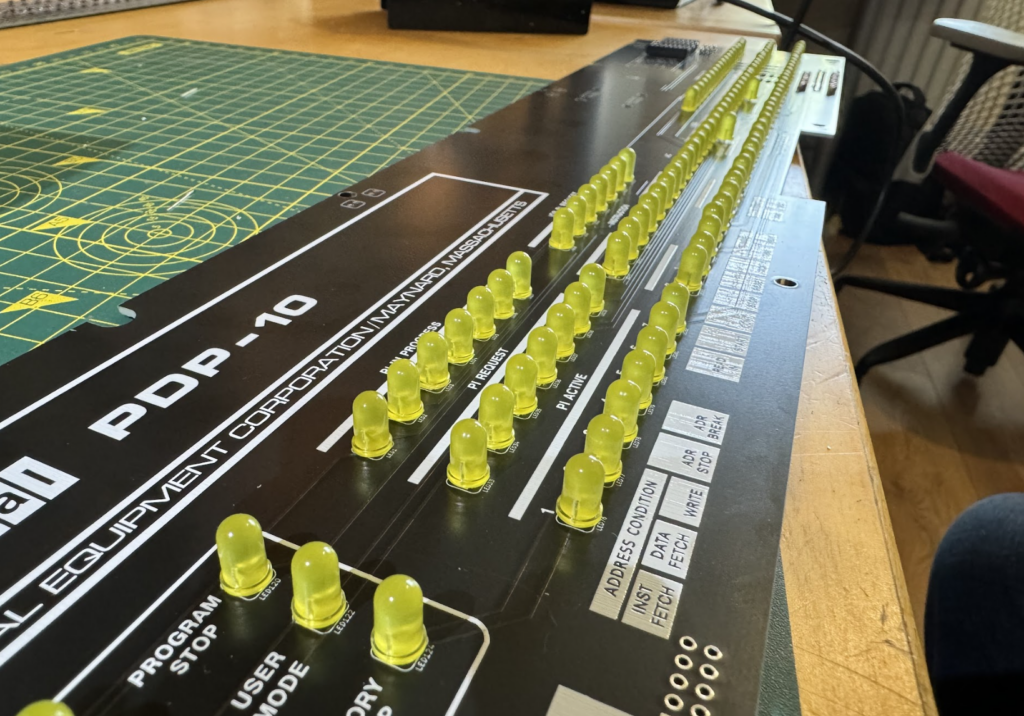
There are a lot of components to assemble, including over 120 LEDs and 74 switches. The kit is well within the capabilities of anyone who is confident with a soldering iron and there is no SMD soldering to worry about. Patience is a virtue here, and will be rewarded with neatly aligned LEDs and switch banks. Oscar has some great tips along the way to help you achieve a perfectly aligned lamp array.
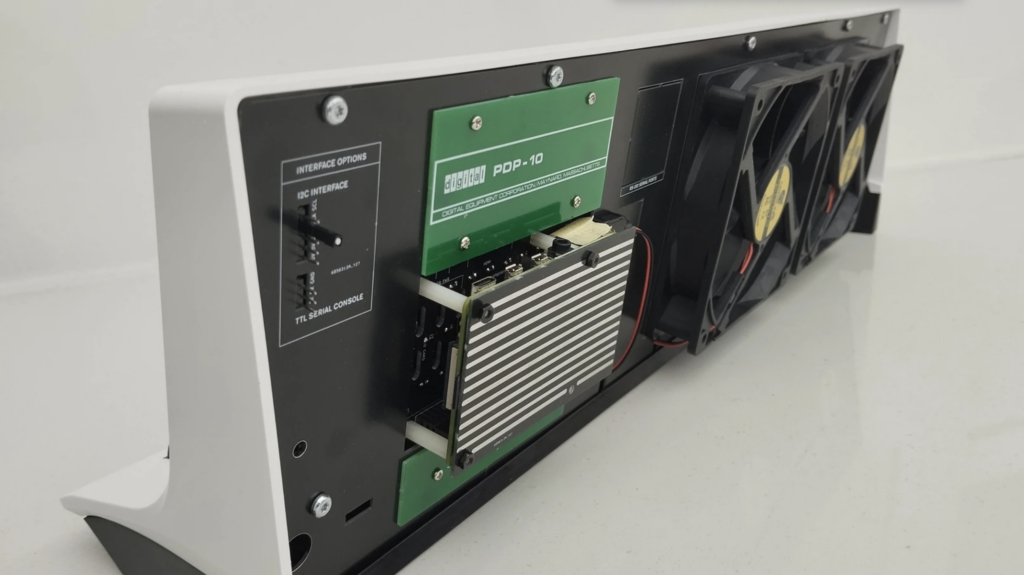
To run everything Raspberry Pi 5 is recommended, mounted on the rear of the main PCB, but depending on what you want to do, you can go all the way down to a Zero 2 W. The kit comes with a number of optional hardware improvements, including cutouts and mounting points for RS232 adaptors and large cooling fans for an authentic sound.
Software
Once built, generous instructions for its use are provided. Software installation is straightforward, running on top of an existing Raspberry Pi OS install. You have the option of running DEC’s own TOPS-10 OS or the more fun ITS from MIT. Documentation and lots of software make this a great tool for exploring computer history.
A nice touch is the teleprinter software included (you’ll need to use HDMI for this). You can also use SSH or even hook up an original terminal or teleprint via the optional RS232 interface. Care has been taken to ensure the main OS is not tampered with, so you can ‘double duty’ your Raspberry Pi if you wish.
The price may make you wince but this still represents good value for money. The time, care and effort put into the kit design, its instructions and provided software truly impressed us. Fun to build and rewarding to explore. A must for any retro computer enthusiast.
A near-perfect execution of preserving computer history in a fun and creative way. Patience and a steady hand will reward you with an amazing experience and a beautiful object.
The MagPi #143 out NOW!
You can grab the new issue right now from Tesco, Sainsbury’s, Asda, WHSmith, and other newsagents, including the Raspberry Pi Store in Cambridge. It’s also available at our online store which ships around the world. You can also get it via our app on Android or iOS.

You can also subscribe to the print version of The MagPi. Not only do we deliver it globally, but people who sign up to the six- or twelve-month print subscription get a FREE Raspberry Pi Pico W!
The post PiDP-10 | #MagPiMonday appeared first on Raspberry Pi.
from News - Raspberry Pi https://ift.tt/1bAjO69
Labels: IFTTT, News - Raspberry Pi

0 Comments:
Post a Comment
Subscribe to Post Comments [Atom]
<< Home