Flokk herd management with Raspberry Pi Zero W
Keeping tabs on cattle ranging over enormous ranches in rural Canada is a serious challenge. “Ranching operates outdoors, in all weather, in remote locations where there is no power or data connectivity,” explains Flokk founder and CEO Mark Olson. Record-keeping has traditionally been done using pocket notebooks, which are easily lost, damaged or trampled underfoot while the rancher struggles to check on each animal’s health and well-being. It’s the sort of task that hapless TV vets might have nightmares about. Nonetheless, detailed and fully up-to-date information about each cow is mandatory in the highly regulated world of animal husbandry.
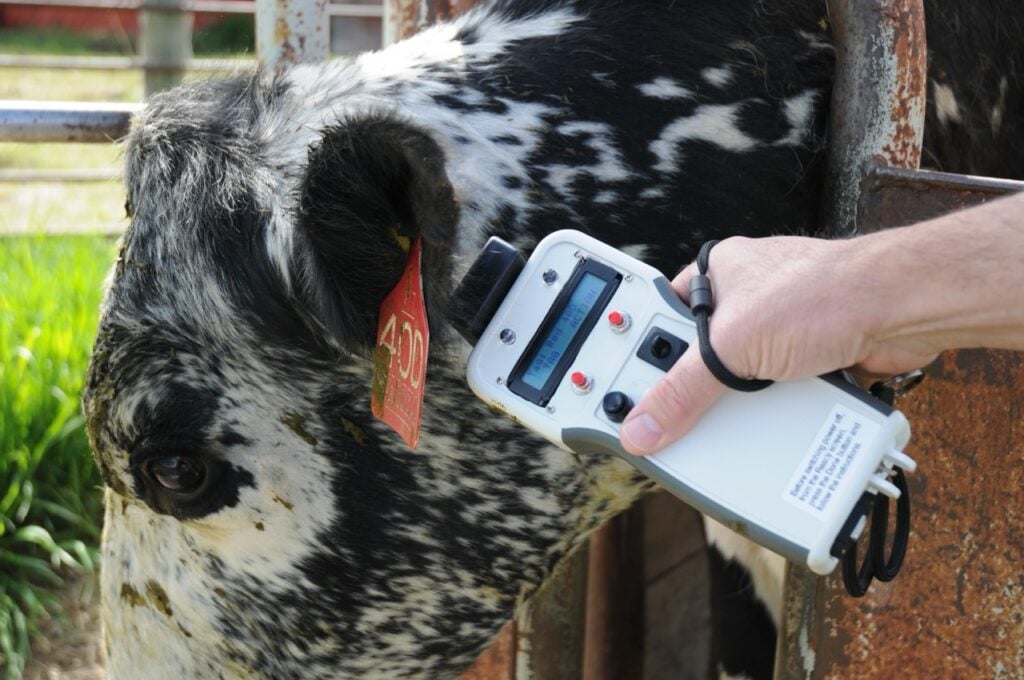
details are saved to a Raspberry Pi Zero W inside and sent to a central server via Starlink satellite broadband
Computer scientist and farmer Mark Olson applied his knowledge of data collection to address the issue, coming up with a ruggedised scanner that has a Raspberry Pi Zero W at its heart and which automates much of the record collection process.
Rural reach
Mark grew up on a farm in Alberta, Canada, and, after briefly exploring the computerisation of agriculture when he graduated in the mid-1980s, went on to work in enterprise IT and management. Open-source software has always interested Mark, not least because his early forays into building home servers were of the DIY, fish-the-hardware-out-of-the-dumpster variety. Linux was the only platform he could afford that would run on the hardware he’d sourced. An interest in Raspberry Pi is therefore no surprise. It’s “a logical extension of my interest and aptitudes in open source,” says Mark, who uses Debian Linux for both Flokk’s website and online services.
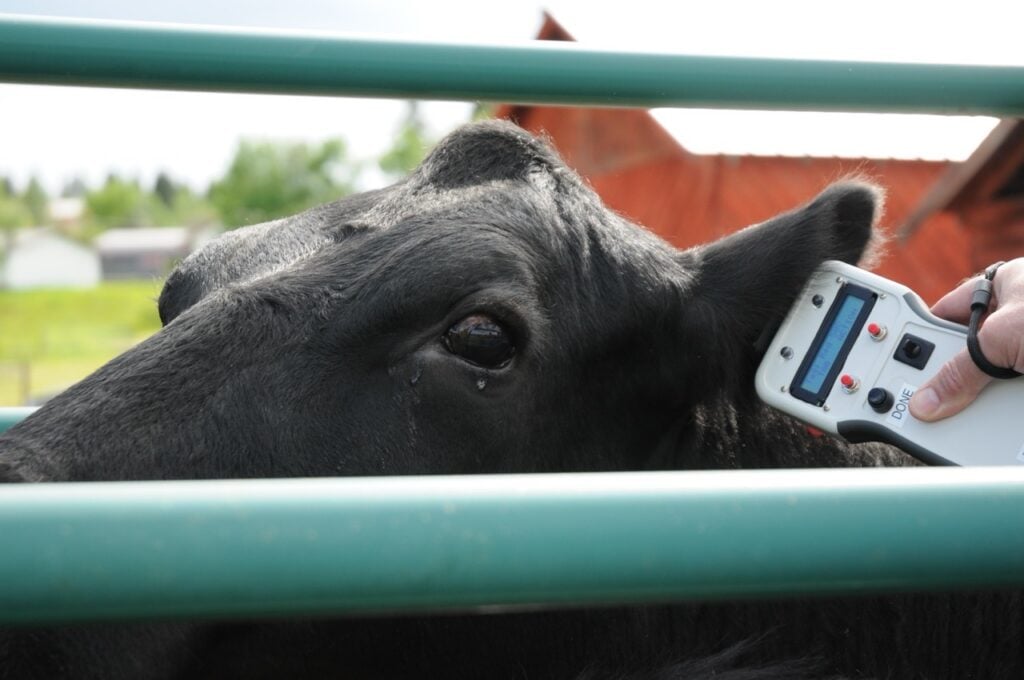
This contrasts with “digital solutions for ranching [that] currently attempt to use hardware built for offices, not ranches. Consumer hardware is expensive and delicate, and unsuitable for the harsh environment of ranches.”
Traceability is not only desirable — it’s legally mandated. All Canadian cattle are fitted with a tag with an RFID code so that, if an issue arises with the animal, it can be traced back, and any other animals that might have been impacted by the issue can be located and investigated.
Flokk digitises data collection and record keeping for cow/calf ranching, a $5 billion industry in Canada and a trillion dollar industry globally, moving it from the small pocket notebooks ranchers use today to a digital solution.
Mark’s LinkedIn article about the importance of such record-keeping for the Canadian agricultural economy offers some valuable insights. He talks of the clear need for beef traceability and for Canada to secure its future food security via agricultural exports. He also emphasises the importance of keeping data (including saleability, individual animal traceability, pregnancy, and other health stats) on-device, freeing up the rancher’s time by giving them the autonomy that comes from not having to laboriously fill out paperwork. Ranchers can now capture data using in-field scans and have it digitised and stored immediately, keeping it safe.
Quick FACTS
- Every livestock animal in Canada should have an in-ear RFID tag
- Most ranchers have no means of reading the CCIA tags, so they keep paper records
- Missing and inaccurate records impact traceability efforts
- Dedicated digital readers are expensive and have no other functions
- Flokk works with record management software, making compliance easier
He points out that Canada spends around 40% of its agricultural services budget on inspection and control, and says this could be massively reduced by using technology to tag and monitor agricultural assets. Starlink provides “a ready answer for rural broadband and wireless connectivity”, and he rates it above 5G connectivity, “which is both far more expensive to install and requires time to roll out, along with ongoing maintenance”.
No platform other than Debian — the flavour of Linux behind Raspberry Pi OS — lets you take the same software and skill set and apply it all the way from a battery-powered handheld, through an SBC desktop, to a multi-node server.
Hard-headed approach
Flokk chose Raspberry Pi for its affordability, high capability, and compatibility with other open-source products. “Raspberry Pi Zero W uses a full-function Broadcom system on a chip, not a microcontroller, and Linux as the OS, [so] Flokk can leverage standard open-source tools. We can add functionality in days and be confident our platform will support whatever software or functionality we will need to deliver in future.”
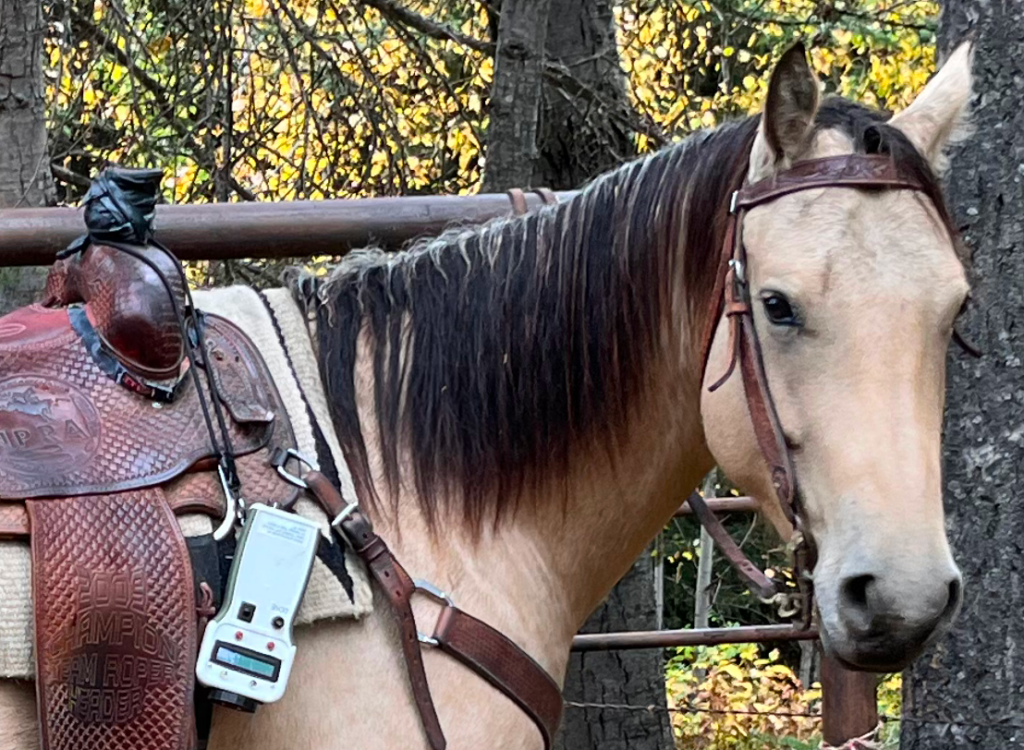
It was important that the cost of the handheld scanners wouldn’t be a barrier to ranchers adopting them; Flokk will make its money from subscriptions, rather than the hardware. The end of life for a Flokk handheld will most likely not be the result of wear and tear or obsolescence — rather, it will be dropped into a pen of cattle and stomped on. Flokk has to be able to rapidly, and affordably, recover a customer’s data from offsite backup and ship them a new Flokk ready to use.
Mark wrote all the code himself, devoting more than 1000 hours to both code and platform development. When they began the process, Raspbian/Raspberry Pi OS would not run on the handheld scanner, so they used Tiny Core Linux instead. Future iterations may use this alongside Raspberry Pi OS.
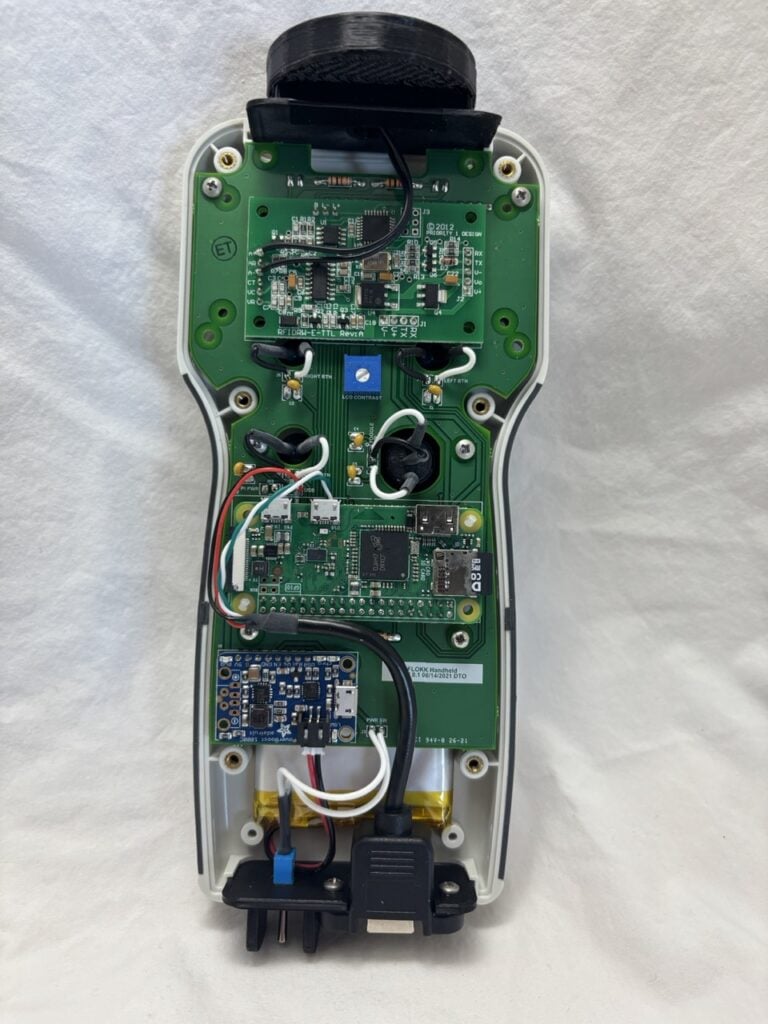
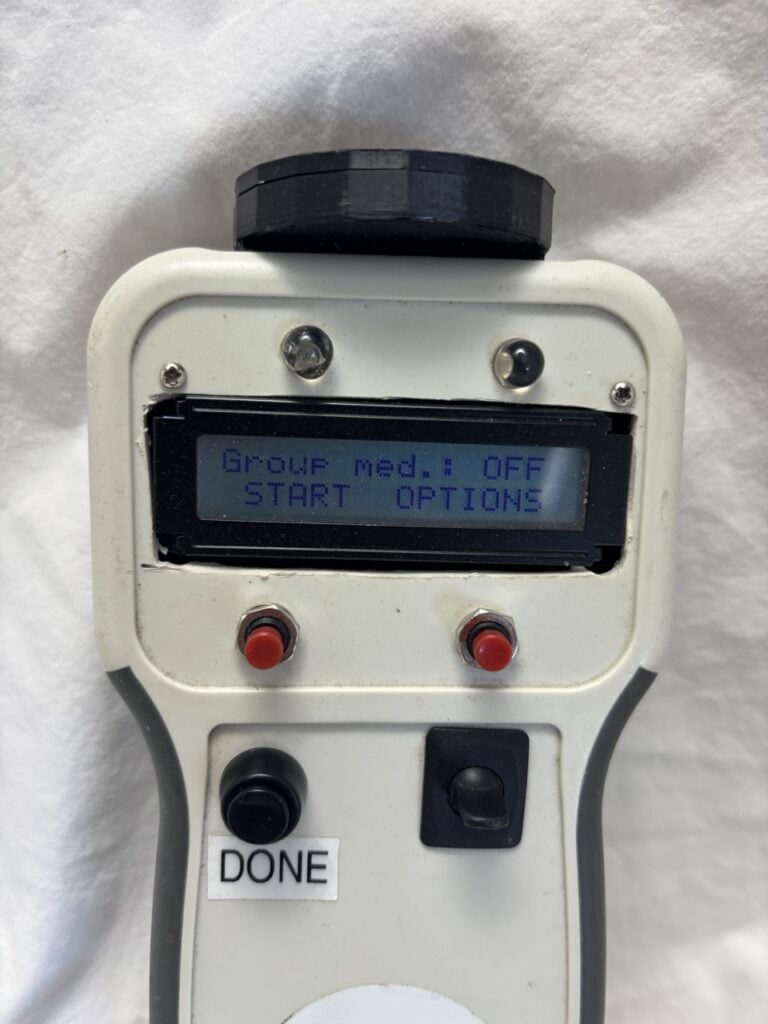
Mark says Raspberry Pi Zero’s capabilities were “a perfect match; right price, power efficient, and exactly the I/O we needed”. Flokk is currently preparing its next iteration of hardware, migrating to Raspberry Pi Zero 2 W, upgrading the handheld scanner’s display, and adding a GPS receiver and, perhaps, a camera.
For now, Mark is busy garnering investor interest in Flokk so that it can be rolled out at scale across Canada’s ranches. Demonstrating its real-world use is imperative. “The Flokk I proudly use for investor presentations has brown stains on it; and the source of those brown stains is exactly what you think it is.”
This article is from Raspberry Pi Official Magazine #161
You can grab this issue from Tesco, Sainsbury’s, Asda, WHSmith, and other newsagents, including the Raspberry Pi Store in Cambridge. It’s also available from our online store, which ships around the world. And you can get a digital version via our app on Android or iOS.
You can also subscribe to the print version of our magazine. Not only do we deliver worldwide, but people who sign up to the six- or twelve-month print subscription get a FREE Raspberry Pi Pico 2 W!
The post Flokk herd management with Raspberry Pi Zero W appeared first on Raspberry Pi.
from News - Raspberry Pi https://ift.tt/IwL0bzy
Labels: News - Raspberry Pi, IFTTT

0 Comments:
Post a Comment
Subscribe to Post Comments [Atom]
<< Home