Ydtechnologius
This is a collection of news and articles on tech and gadgets.Informative news on technology, gadgets and news.Latest Technology News, Gadget Reviews, Latest Gadgets, Latest Gizmos and Latest News in Tech.
Roughly three months ago, we launched our second RP2350 hacking challenge, this time focusing on the side-channel analysis of our new SCA-hardened (side-channel analysis–hardened) AES library.
We’ve had some good chats with a number of teams and individuals working on this challenge, and it looks like our new AES library is thus far unvanquished, but we hear that progress is being made and a bit of extra time might provide ample opportunity to ruin our day (yay…). You’ll no doubt be glad to hear that we’re therefore extending the submission deadline for this challenge to midnight (UK time) on 31 December 2025. The RP2350 Hacking Challenge 2 page is the place to go for full details of the challenge: happy hacking!
AE-yes?
AES is a very popular and important block cipher encryption standard. It has been widely used for over twenty years now.
As part of our recent 2.2.0 Pico SDK release, we added a useful new tool that allows folks developing designs with RP235x to AES-encrypt their software and data stored in flash, and securely decrypt into on-chip SRAM at boot (RP2350 has lots of on-chip SRAM, and we mainly boot from external QSPI flash chips). This new self-decrypting binary support is very important to customers who wish to protect their software and application data from reverse engineering, decompiling, flash readout, or modification.
Many AES implementations (both software and hardware) are susceptible to side-channel attacks. Most of these attacks involve recording and carefully analysing many hundreds of thousands (or millions) of traces that detail various goings-on in the chip while it is decrypting AES-encrypted data. Typically, these are time-series measurements of power consumption and/or electromagnetic emissions. Using these measurements, it is often possible to learn or spot data that is being leaked, and this data in turn can be used to reduce the effective length of the AES key, often to the point where it’s feasible to brute-force the rest of the key. Once you have that, you can cause all sorts of mischief.
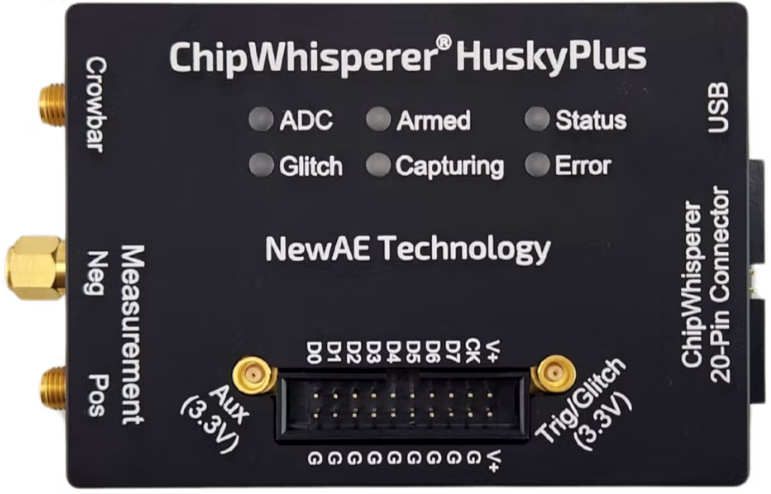
Our friends at NewAE make some of the best SCA tools out there
To help protect RP2350 against this, we worked with some talented folks to harden and test our custom AES implementation against these side-channel attacks. You can read more about this hardening work here.
Take a look at the RP2350 Hacking Challenge 2 page to find out more about our current, newly extended challenge, and watch this space for an update on the results once the new deadline has passed.
A little over a year ago, we launched the Raspberry Pi Pico extension for Visual Studio Code with the goal of simplifying project setup and configuration. Since then, we’ve received lots of feedback from developers saying it really helped them get started with embedded firmware development. From beginners struggling to wrap their heads around CMake configurations, toolchains, and SWD debugging, to experienced developers who just want to spin up a quick prototype — there are countless ways people use our extension.
Since launch, we’ve focused on continuously improving the user experience — guided by extensive community feedback — while adding new features to make development smoother and more enjoyable. But with the world of embedded firmware development evolving faster than ever, and with new technologies and approaches emerging every month, two in particular stood out to us as ideal candidates for integration into the Pico VS Code extension: Zephyr and Rust. These technologies make it easier for more people to dive into MCU development, while also giving seasoned developers powerful tools tailored to their preferred workflows.
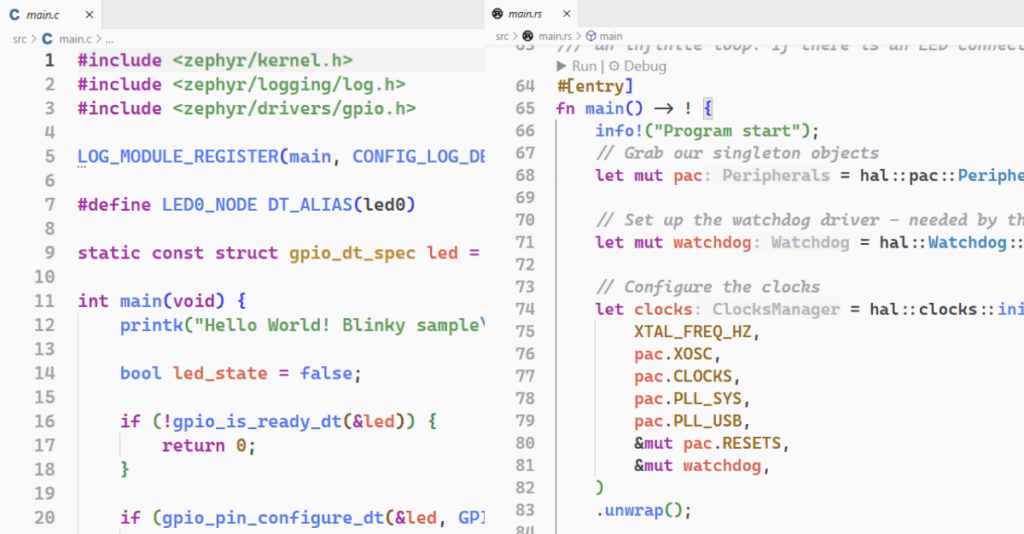
Zephyr, introduced in 2016 by the Linux Foundation and Wind River Systems, has gained significant traction in the past year — and rightly so. Built on the Rocket RTOS kernel, Zephyr bridges the gap between Linux and the world of low-power embedded systems. With familiar concepts such as the Device Tree and a robust, modular architecture, it’s a great entry point for developers coming from Linux kernel development backgrounds or professionals looking for a flexible, production-ready RTOS for their next project.
And then there’s Rust — a language many of you already know and love for building safe, high-performance software, from developer tools to web servers. Over the past few years, Rust has made big strides in the embedded ecosystem. Thanks to the efforts of the Rust Embedded community and the rp-rs project, you can now write modern, fast, and memory-safe firmware for your Pico boards in Rust — using a language you might already feel right at home with.
As these technologies mature, they often introduce new expectations for how projects should be structured and configured. That’s why we’ve worked hard to integrate both Zephyr and Rust into our extension — making it easier to get all the right dependencies installed, set up a new project in minutes, and start experimenting without the usual friction.
How do I get started?
First things first — make sure your Visual Studio Code installation is up to date.
On Windows and Linux: open the Help menu from the menu bar and select Check for Updates…
On macOS: open the Visual Studio Code menu (on the far left of the menu bar) and select Check for Updates…
Once that’s done, make sure you’ve got the latest version of the Raspberry Pi Pico extension installed. Open the Extensions Marketplace in the Activity Bar and search for:
@id:raspberry-pi.raspberry-pi-pico
Select the extension, and you’ll see the installed version number on the right-hand side of the README. If there’s an update available, you’ll see a blue Update to… button next to the logo. Click it, then restart the extension when prompted.
Before continuing, make sure you have all the default required dependencies for your operating system installed — you can find the most up-to-date list in the extension’s README. (Currently, this additional setup is only required for macOS and non–Raspberry Pi OS Linux distributions.)
Rust prerequisites
To use Rust, you’ll need the rustup tool installed and available in your system PATH, along with a compiler for your host platform.
Linux: We recommend installing GCC using your system’s package manager
macOS: The compiler is included with the Xcode Command Line Tools, which you should already have installed if you followed the extension’s README
Windows: Follow the installation instructions provided by the rustup installer or the official documentation
Zephyr prerequisites
Zephyr has a few more prerequisites. While the Pico extension handles most of them automatically, there are still a couple of tools that need to be installed manually:
Note: Starting with Zephyr SDK 1.0.0, wget is included for macOS and Linux, so we’ll be able to remove this requirement once that version is officially released.
On Debian-based Linux distributions, install these tools with:
The python3-venv module is already included in the standard Python 3 installer on macOS.
With all that out of the way, it’s time for the fun part — creating your first Rust and/or Zephyr firmware projects!
New Zephyr firmware
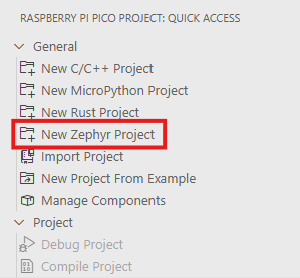
To create a new Pico Zephyr project, open Visual Studio Code and click the Pico icon in the Activity Bar on the left. This opens the Quick Access panel, where you can select New Zephyr Project to launch the Zephyr project wizard.
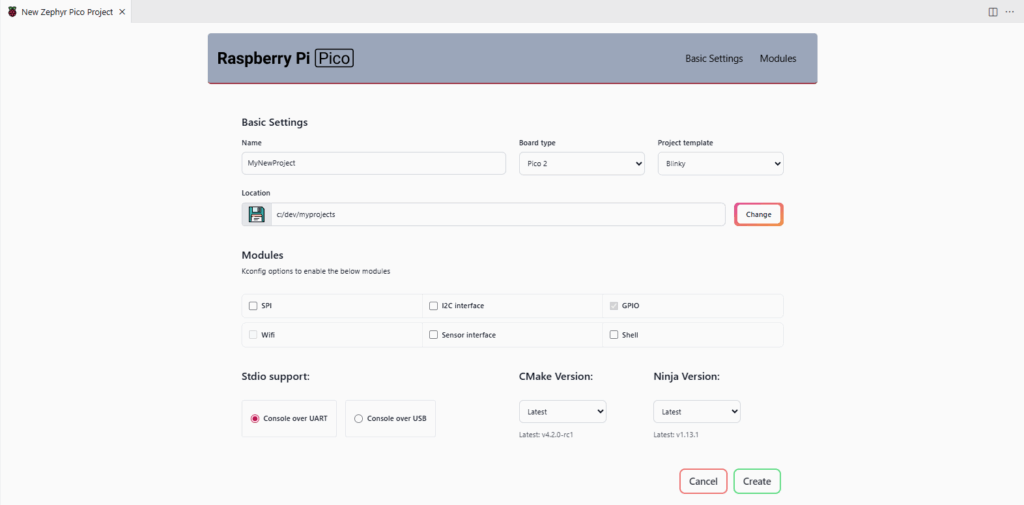
The wizard is divided into three sections, but to create your first project you’ll only need to focus on the top section: Basic Settings.
Enter a project name, choose a location for your project folder, and select the board type you want to target (you can always change this later).
For your first project, we recommend choosing a non-wireless board variant, since Zephyr doesn’t currently support the simple ‘Blinky’ example on wireless boards.
Next, open the project template selector and choose Blinky. This template includes example code to blink the on-board LED.
Once you’re happy with your settings, click the green Create button in the bottom-right corner.
The extension will now install all required dependencies and set up a Zephyr workspace for you. This process can take a while — the full toolchain is over 2.0 GB in size — so make sure you have enough disk space available.
After setup is complete, your new project will open automatically.
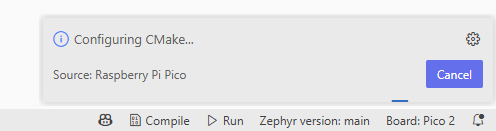
When opening a Pico Zephyr project, the extension automatically checks that all requirements are installed and configured correctly. We recommend waiting until the progress indicator in the bottom toolbar disappears before interacting with the project.
By default, the extension will automatically configure your build folder. This usually takes about 30 seconds.
The first step in any new Pico Zephyr project is to click the Compile button in the bottom-right toolbar. This ensures that all Zephyr auto-generated C headers are created so that IntelliSense can correctly resolve Zephyr includes.
Once compilation is finished, you can either:
Click Run to load the firmware onto your Pico, or
Use the Debug side panel to flash and debug your Pico with a Raspberry Pi Debug Probe (if you have one connected)
Next steps
To get the most out of your new Zephyr-based firmware, we recommend visiting the official Zephyr documentation for a comprehensive introduction to its system architecture, APIs, and development workflows.
For questions, tips, or to share your projects with others, join the conversation in the Raspberry Pi Forums — there’s a dedicated section for Raspberry Pi Pico and Zephyr development where you can get help from the community and the Raspberry Pi team.
New Rust firmware
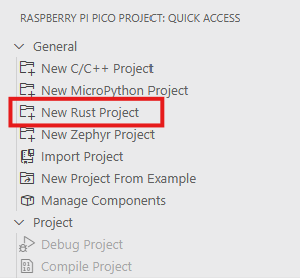
To create a new Rust Pico project, open Visual Studio Code and click the Pico icon in the Activity Bar on the left. This opens the Quick Access panel, where you can select New Rust Project to launch the Rust project wizard.
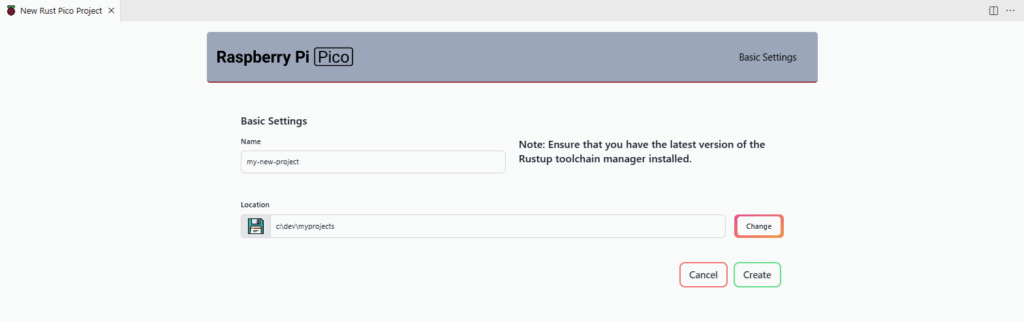
The Rust project wizard is designed to be as simple as possible. First, enter a project name and choose a location where you’d like the new project folder to be created.
By default, each new Rust project starts from a template that includes example code to blink Pico’s on-board LED. It supports both RP2040– and RP2350-based devices — including the RISC-V target — which you can later select in the toolbar, next to the Run button.
Once you’re happy with your settings, click the green Create button in the bottom-right corner. The extension will automatically install the necessary dependencies and Rust toolchains for you, which may take a few minutes. After that, your new project will be generated and opened automatically in VS Code.
If you haven’t already installed them, VS Code will suggest a handful of useful extensions for embedded Rust development — including Cortex-Debug, rust-analyzer, and Debugger for probe-rs. We highly recommend installing these for the best development experience.
Next steps
To dive deeper into embedded Rust development on Raspberry Pi microcontrollers, check out the official documentation for the relevant hardware abstraction layers (HALs):
These resources provide excellent overviews of the APIs, as well as examples for working with peripherals, timers, GPIOs, and more.
For help, feedback, or just to chat about your Rust-on-Pico projects, head over to the Raspberry Pi Forums. There’s a dedicated area for Raspberry Pi Pico and Rust development where you can exchange ideas, ask for assistance, and connect with fellow developers.
Contributors who made this possible
Bringing Zephyr and Rust support to the Raspberry Pi Pico ecosystem was only possible thanks to the hard work and dedication of many open-source contributors. Here are some of the people and communities that made it happen:
Zephyr support
Magpie Embedded — contributed major components to the Zephyr project to enable full support for the Raspberry Pi Pico (W) and Pico 2 (W) boards
The Zephyr Project team and all the contributors who helped integrate and refine Pico support within Zephyr — your work made this collaboration possible
Rust support
The rp-rs developers and organisation — for building and maintaining excellent hardware abstraction layers (HALs) and tools for Raspberry Pi microcontrollers
The Rust Embedded Working Group — for laying the groundwork that makes Rust a great fit for resource-constrained and embedded environments
The probe-rs team — for providing modern tools that make debugging Rust firmware on Raspberry Pi microcontrollers straightforward and reliable
We hope these improvements to the pico-vscode extension will help make your development experience smoother and more enjoyable.
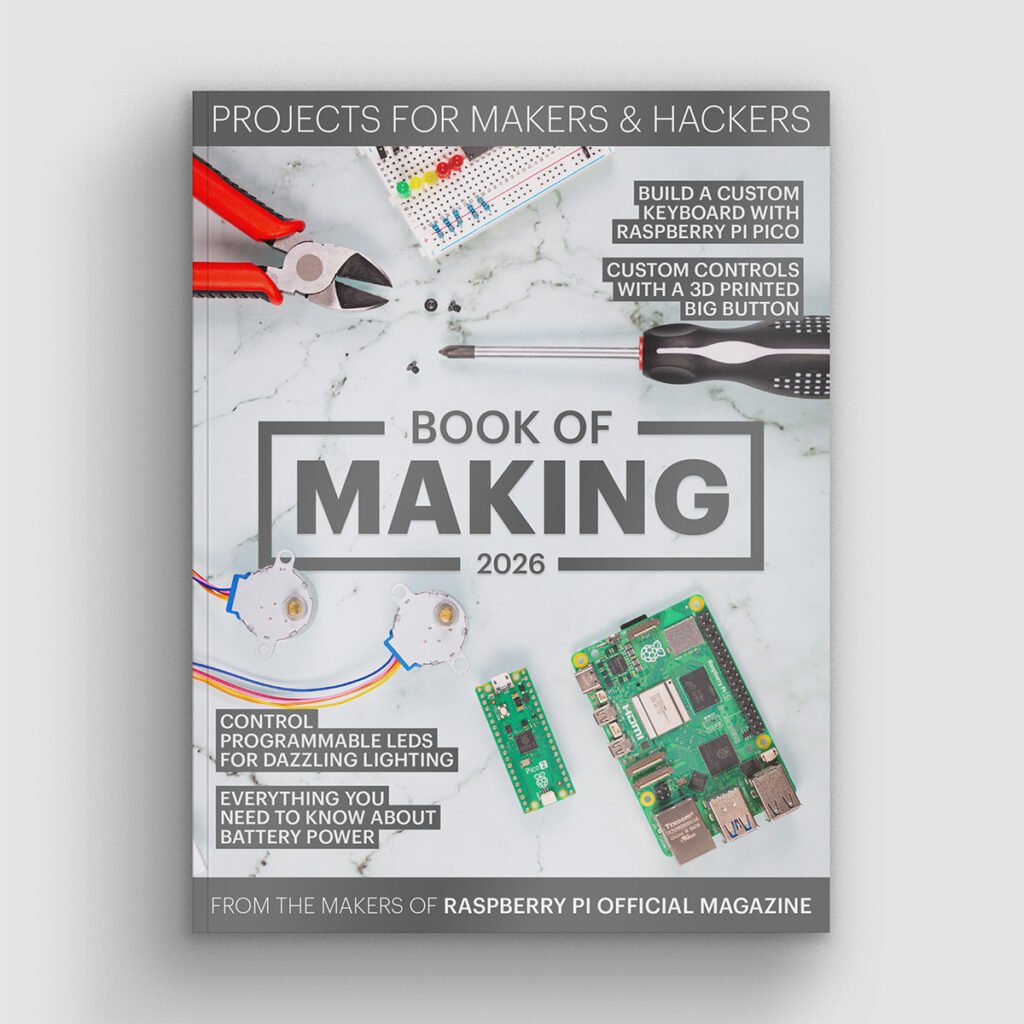
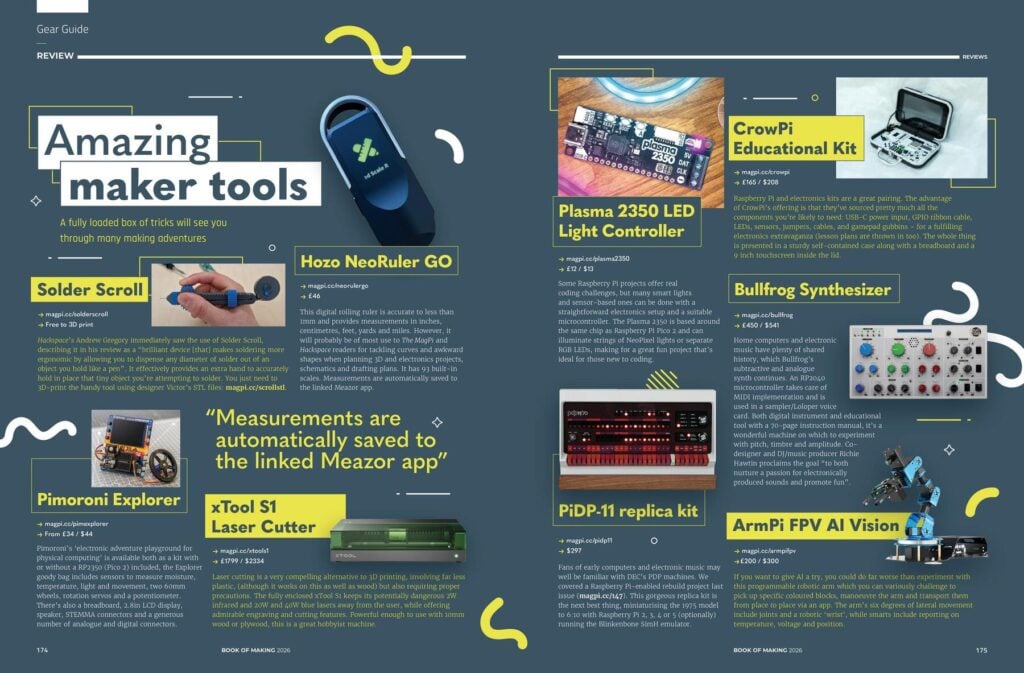
It’s been over a year since we incorporated HackSpace magazine into Raspberry Pi Official Magazine. Each month, we continue to help you indulge your desire to make semi-useful things out of home electronics, microcontrollers, 3D printers, and the like. If you feel the need to indulge that desire to excess, look no further than the Book of Making 2026, on sale today.
Book of Making 2026
Book of Making 2026 distils the essence of HackSpace into a selection of our favourite maker projects. Whether you want to build a custom keyboard or a dazzling LED display, advance your 3D-printing skills, or control the world around you with a Raspberry Pi Pico, there’s something for you here.
You’ll learn about great tools and gadgets for makers
This book is full of projects perfect for an hour, an afternoon, or a weekend; be inspired by the amazing community projects you’ll find in its pages and make your own creations using the step-by-step guides. With a bit of know-how, you can 3D-print jigs for more accurate woodworking, build your own custom games controller, add artificial intelligence to an old phone, or do just about anything else you put your mind to. Whether you’re an experienced electronics programmer or just getting started, there’s a project in here for you. Fire up your 3D printer, soldering iron, or Raspberry Pi, and start making!
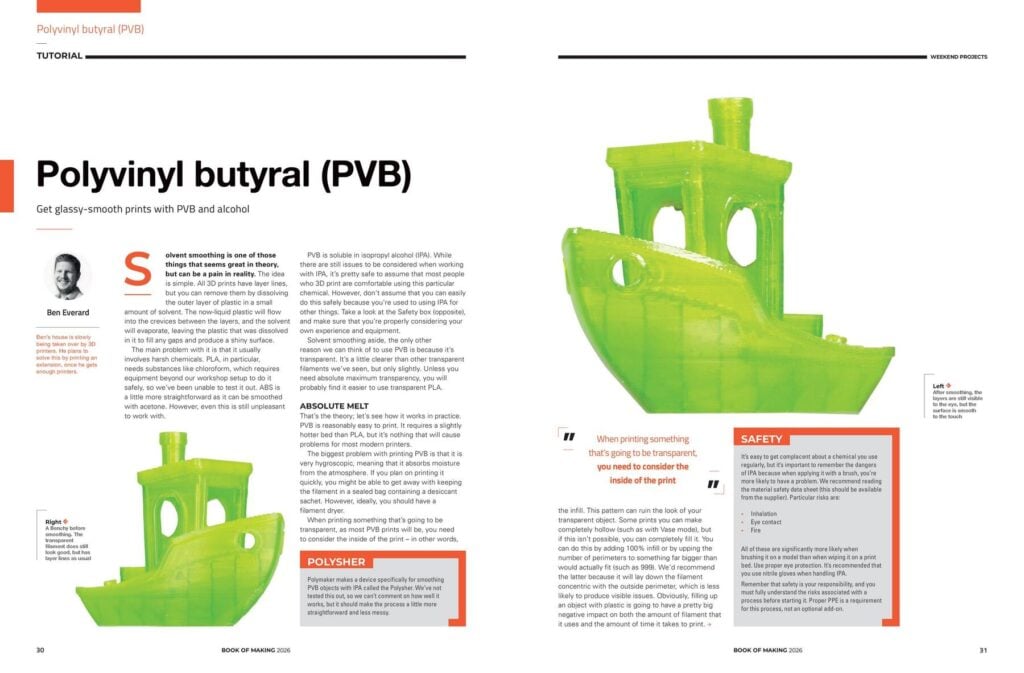
You’ll also learn about some of our favourite 3D-printing materials, like PVB
Hackspaces and makerspaces have exploded in popularity all over the world, as more and more people want to make things and learn in the process. Written by makers for makers, this book features a diverse range of projects to sink your teeth into. Grab some duct tape, fire up a microcontroller, ready a 3D printer, and hack the world around you!
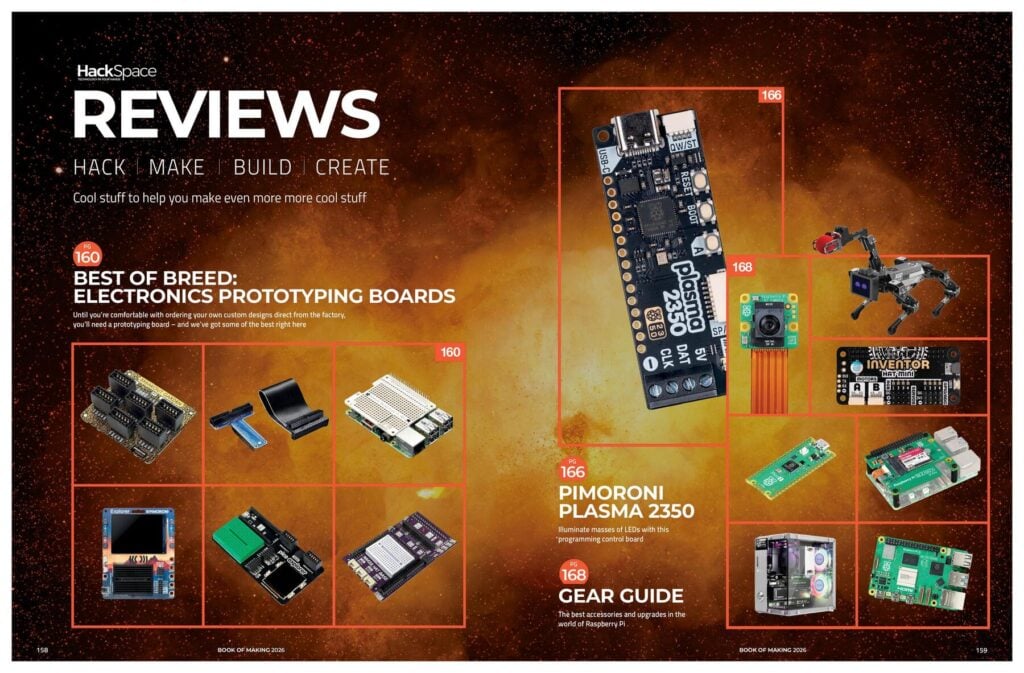
Our ‘Reviews’ section will help you find the best of everything
Get it today!
Book of Making 2026 is out right now — grab your copy in stores or online from our own store for just £14.
You may remember this majestic vessel from when we wrote about it in 2021, after it had a Raspberry Pi-based makeover to become a fully automated pleasure craft. Sfera Labs’ Ulde Arcidiaco has now upgraded the 63-year-old Norwegian tug to take advantage of both Raspberry Pi 5 and Compute Module 5. Raspberry Pi Official Magazine caught up with The Baltic in the latest issue, out now.
In 1962, The Baltic, a 26 metre-long Norwegian tug, took to the oceans. Unlike today, boats of the 1960s were largely manually controlled. Little wonder because the most widely used computer was IBM’s 1401: it had a 16,000-character core memory and weighed several hundred kilos. The 1401 was so expensive that most companies would generally rent one.
Former tug The Baltic had a Raspberry Pi-based makeover in 2021 to become a fully automated pleasure craft
The 1401 computer took 17 seconds just to boot up and lacked both software and interfaces needed to work in industrial, let alone marine, scenarios. Other early computers such as the renowned DEC PDP-1 would have been no more suitable or affordable to control a commercial craft. Yet by the time The Baltic tug had been in operation for 20 years, computing was beginning to make real inroads, and computer-controlled ships came on stream. Around this time, The Baltic was taken out of service and sold on. Eventually, time and computer capabilities caught up with the venerable craft, and in 2021 The Baltic embarked on a new life, with a brand-new control system built around Sfera Lab’s Raspberry Pi and Compute Module Strato and Iono hardware.
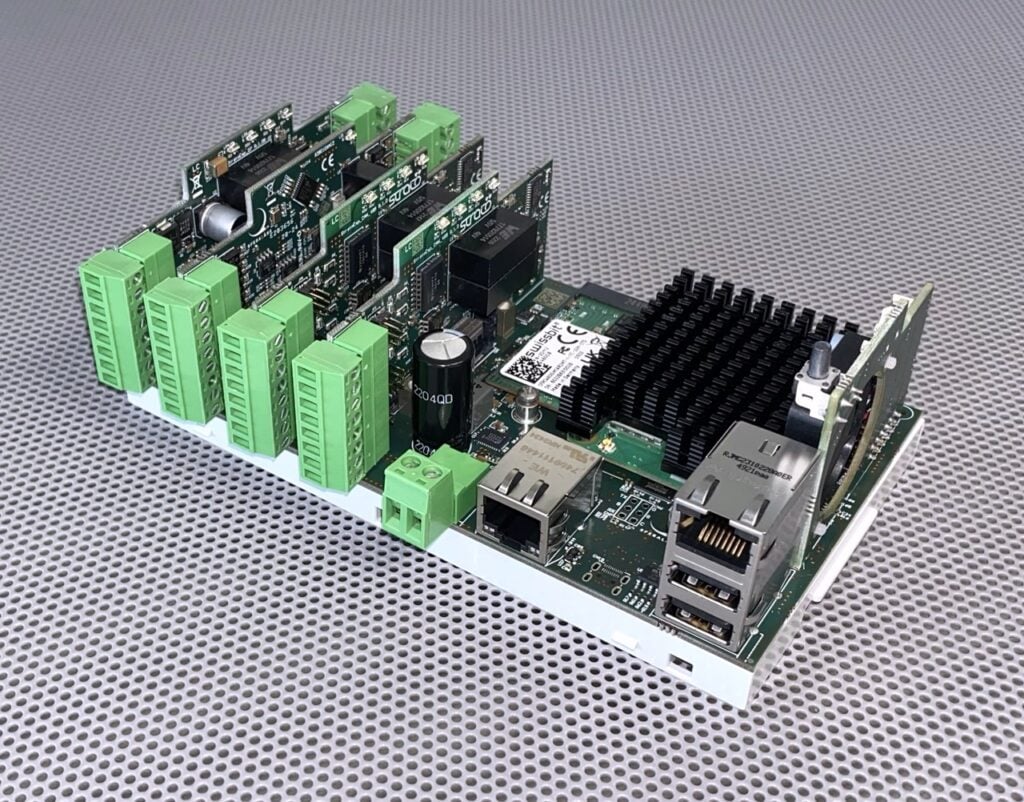
Upgrading the IPMS to more powerful Compute Module 5-based Strato Pi Max XL units significantly improved its efficiency and failover support
Heritage value
By the early 1980s when The Baltic tug was decommissioned, huge strides had been made in computing capabilities and costs had plummeted. After languishing on the south coast of England and then voyaging to the Mediterranean, The Baltic’s fortunes changed. “The new owner had the ambitious goal to fully refit the boat and transform it into a yacht, preserving the original design and heritage of the unit,” explains Ulderico Arcidiaco, the man tasked with modernising and fully automating the revitalised craft.
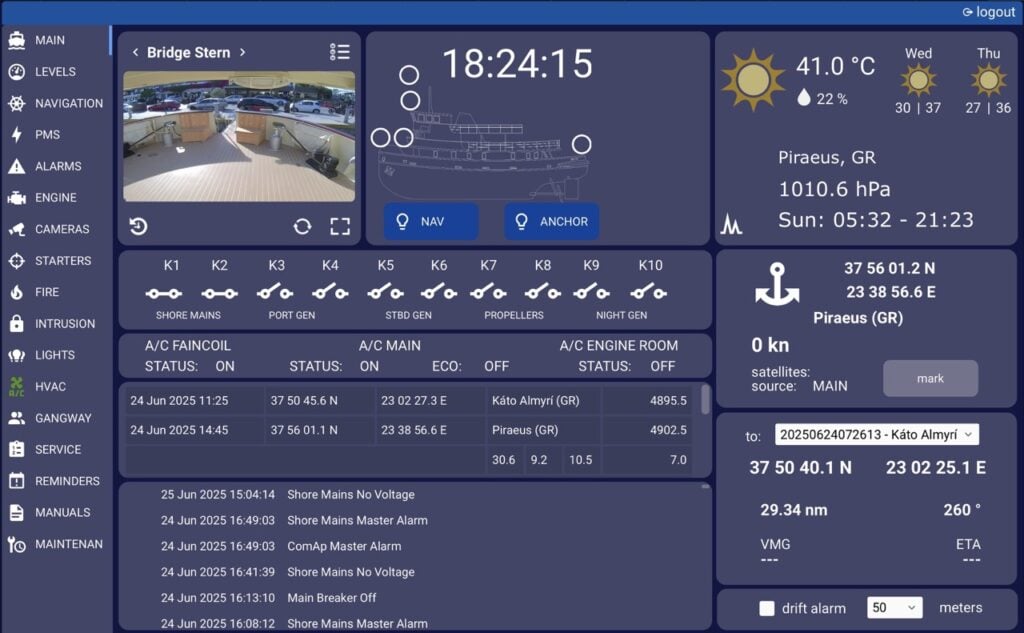
Sfera’s bespoke IPMS interface controls almost every aspect of the ship
Standard PLCs (programmable logic controllers, often described as industrial computers) are used for the power management and some automation aspects of most ships, while everything else is done separately. Ulde was approached to add automation and decided on an audacious plan for an IPMS (Integrated Platform Management System) such as those found on modern military units or very large commercial ships. The fully integrated approach controls of all of the ship’s subsystems. The setup would cost a fortune to implement the traditional way, but made sense using Sfera’s Raspberry Pi-based PLCs and the firm’s own supervision software. He installed Strato Pi units to provide full, integrated control of The Baltic’s core and supplementary functions, from power distribution to tanks and pumps control, navigation, alarms, fire, lighting, stabilisers, chargers, inverters, battery banks, and video feeds.
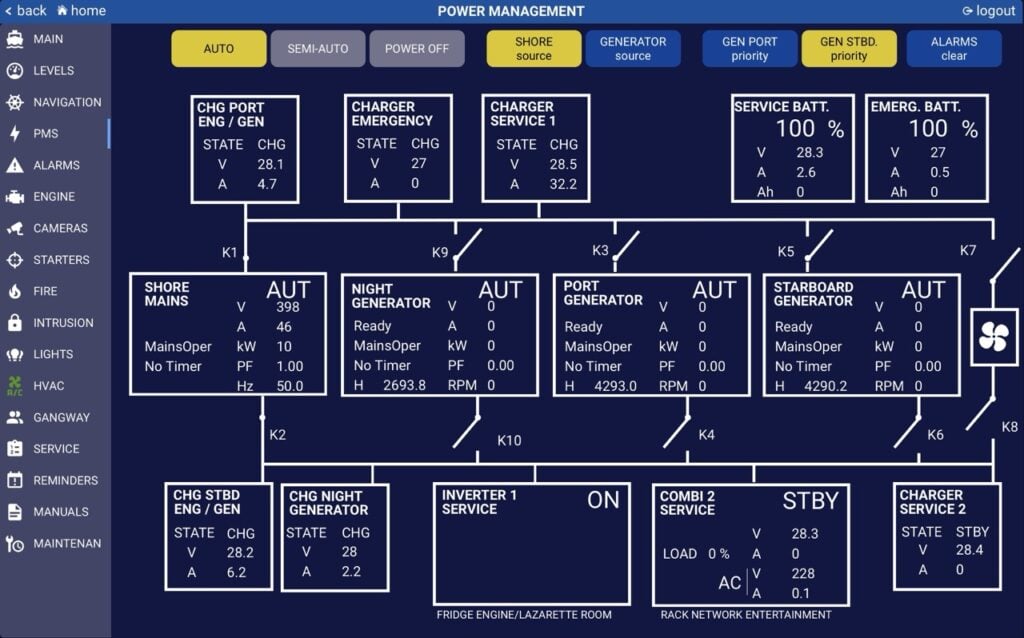
Sfera Labs’ take on IPMS (Integrated Platform Management System) provides detailed insights into the power being generated and distributed on board.
The first phase of the refit saw Ulde install Strato Pi Compute Module Duo and Raspberry Pi Compute Module 3+ on The Baltic. These were replaced in 2022 with two Strato Pi UPS (uninterruptible power supply) modules with 4GB Raspberry Pi 4B. “It was a plug and play replacement,” he notes. “The combination of a more powerful CPU and more memory resulted in a 2× to 4× increase in performance, buying us ample margin to address the new needs.”
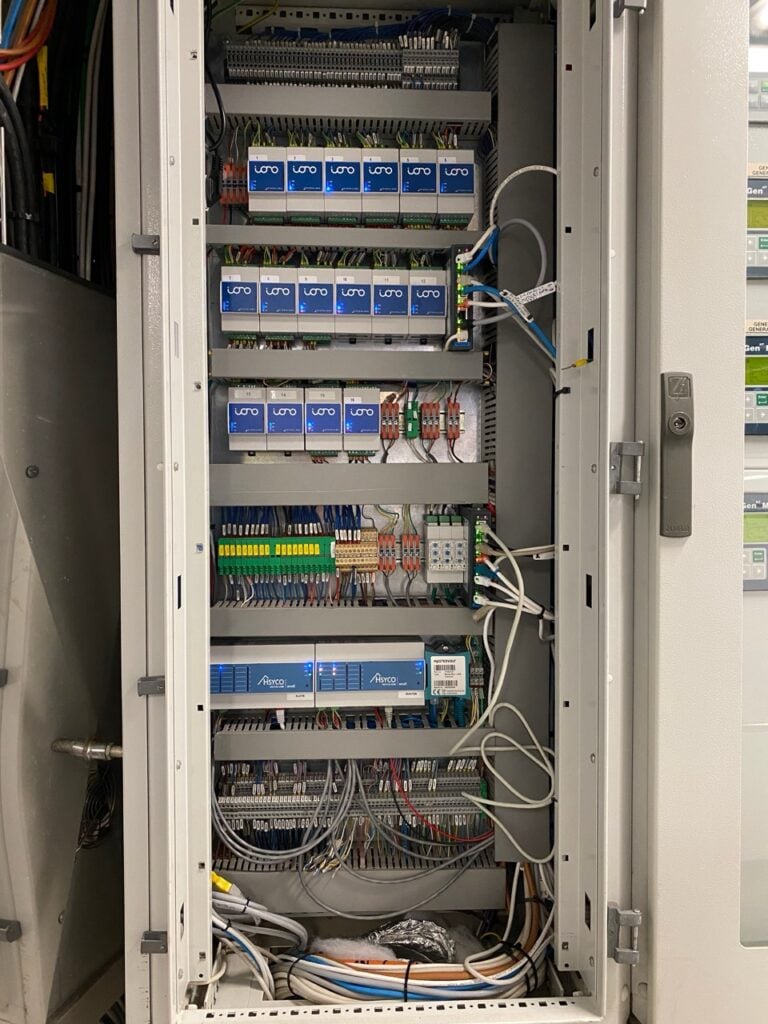
The Baltic’s 2025 upgrade saw the Strato Max and Iono hardware that governs the propulsion, power generation, temperature, and automation updated to Raspberry Pi 5 and Compute Module 4
Nonetheless, by this year, Ulde saw the sense in upgrading. “When sailing, the amount of data that has to be processed and stored in real-time is significant,” he observes, and he knew from the outset that performance updates would be needed over the years, especially with new onboard systems and services to support. Two fully redundant Strato Pi Max XL units with Compute Module 5 and 8GB RAM plus a 480GB SSD now function as the core IPMS processors. Performance-wise, The Baltic’s upgraded setup is now around 15× more powerful than the original CM Duo setup Ulde first installed.
Time and tide
Having been born just a couple of years after The Baltic first set sail, Ulde has been an electronics and computer enthusiast since his teens and says he has seen “a meaningful chunk of the computer evolution”. The founder and co-CEO of industrial computer specialist Sfera Labs, Ulde says Raspberry Pi is one of the most important developments that happened throughout this journey. “Raspberry Pi opened a whole range of new opportunities, similar to what Linux did on the software side.
Original drawings showing The Baltic back when it was a lowly tug-boat
“Just as it was inconceivable to install a computer on a yacht in 1962, so it was unthinkable until a few years ago for a relatively small company such as Sfera Labs to be creating products and software capable of implementing a full IPMS on a complex vessel.”
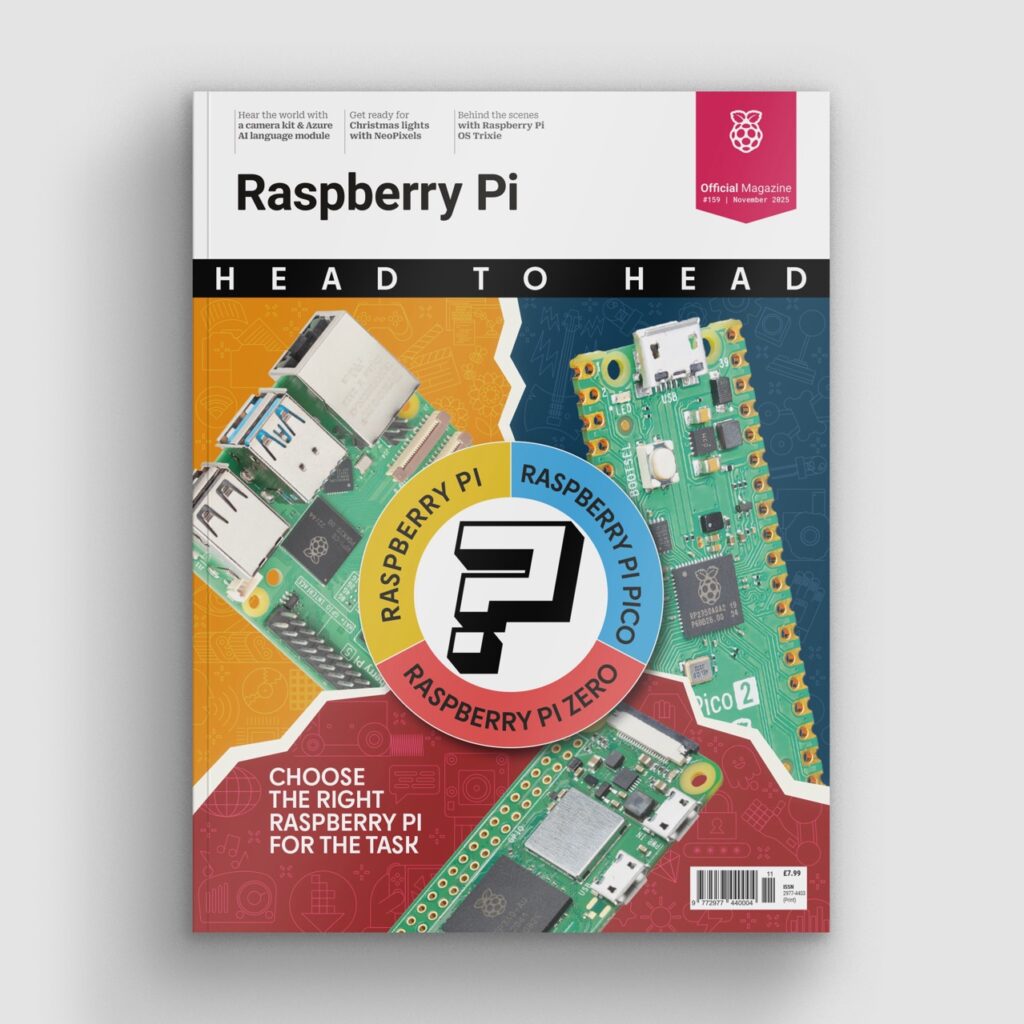
Raspberry Pi Official Magazine #159
You can grab this issue from Tesco, Sainsbury’s, Asda, WHSmith, and other newsagents, including the Raspberry Pi Store in Cambridge. It’s also available from our online store, which ships around the world. And you can get a digital version via our app on Android or iOS.
You can also subscribe to the print version of our magazine. Not only do we deliver worldwide, but people who sign up to the six- or twelve-month print subscription get a FREE Raspberry Pi Pico 2 W!
We’re working hard to reduce our carbon emissions and, where possible, to reach net zero. An important part of this process is reporting our Scope 1 and 2 emissions — that is, direct emissions from sources owned or controlled by the company, and indirect emissions from generating the energy that the company purchases — across our business properties.
We moved into our new 28,000 sq ft headquarters in December 2023, and have since introduced several measures both to lower our emissions and to streamline reporting them. Built in 2008, the site remains in good condition; being a big glass box, it even benefits from natural heating. But in order to become more sustainable, the building requires some retrofitting, and we’ve identified four key areas that will help us achieve net zero.
Solar power
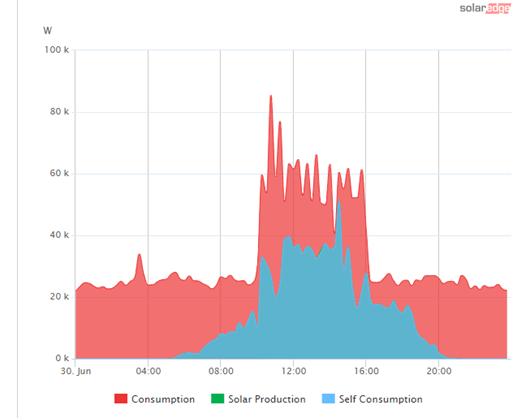
Since installing a fleet of rooftop solar panels in June 2024, we’ve managed to reduce our electricity consumption by 20%. The 85.5 kW East–West array, with its 66.6 kW inverter, currently covers 33% of our electricity use. While long, sunny days provide ample energy for us, the heat they bring also increases the demand for air conditioning, which is both costly and energy-intensive; we expect our solar energy coverage to fluctuate with the seasons, averaging out at 20%.
Our long-term goal is to install more solar panels to minimise the impact the changing weather has on our emissions. Plans are already under way to triple our current solar energy generation.
EV charging stations
Monitoring staff travel to and from work is something that we are required to do, as commuting contributes significantly to our overall emissions. As part of our efforts to reduce our grey fleet impact, we installed 24 Easee EV chargers in August 2024 to help staff who need to drive to work adopt more electric vehicles. The chargers are capable of toggling between a single and a three-phase power supply, meaning a car could potentially be fully charged in three to four hours.
So far, the scheme has proven successful: looking at the car park at the time of writing, 12 of the 45 cars currently parked are electric, and a total of 35 staff members are signed up to use the service.
Turning off the gas
We have reconfigured our plant room by removing the gas-powered calorifier that provided hot water to the central core and shower block, replacing it with a heat pump system that delivers a coefficient of performance (COP) of four or above.
Following the success of this upgrade, we are now looking to replace our gas boilers with more efficient cascading heat pumps. This plan is still in the works, but we hope to have the new system up and running sometime next year.
Attacking the out-of-hours base load
Although the office is empty out of hours, the building still consumes a base load of around 25 kW per hour, the vast majority of which is being used by our server room as we can’t shut that down overnight. This equates to roughly 350 kWh per 24-hour cycle. By sub-metering our energy, we hope to assess and identify where this leakage is coming from and to reduce it.
This is more complicated than it sounds, as the current data shows that the burn is spread thinly across the site, rather than between a few key pieces of equipment. We are aiming to lower our base load by 5 kW per hour, for an overall reduction of 75 kWh per day, 2250 kWh per month, and 27,000 kWh per year.
From insight to action
Tthese initiatives might seem small in the grand scheme of corporate sustainability, but they are already proving that incremental changes can lead to big results. Not only are we making our office greener, but the measures we are taking to monitor and report our emissions are making us smarter about our energy use, inevitably shaping our next steps towards achieving net zero.
In recent years, we’ve made it easier to find Raspberry Pi Press books, whether it be online or on store shelves. We’ve now teamed up with Humble Bundle to let you name your own price for 16 of our books.
For $8 (roughly £6/€7), you’ll get DRM-free copies of our books, and your purchase will support the Raspberry Pi Foundation‘s work to help young people reach their potential with computing. Check out the All Things Raspberry Pi bundle, which runs from Monday 20 October to Monday 10 November. (The start and end time is 11am Pacific).
There are two tiers to the bundle. Pay at least $8/~£6/~€7, and you’ll get these three titles:
The Official Raspberry Pi Handbook 2024: The best projects from a year of our official magazine.
The Official Raspberry Pi Beginner’s Guide: Get your Raspberry Pi up and running, learn to code, and experiment with electronics.
The Computers That Made Britain: The stories of 19 iconic computers including the ZX Spectrum, BBC Micro, and Commodore 64.
But wait, there’s more
If you pay at least $18/~£14/~€17, you get those books and more:
Code the Classics Volume II: Write your own modern classics inspired by the greatest video games of the 1980s.
Unplugged Tots: Introduce your child to the foundations of computer coding, screen-free.
The Computers that Made the World: The story of the birth of the technological world we now live in.
Book of Making 2026: the best makes from a year of HackSpace.
The Official Raspberry Pi Handbook 2026: The best projects from a fantastic year of Raspberry Pi Official Magazine.
Make games with Python: Coding your own shoot-’em-up game is infinitely more satisfying than beating any end-of-level boss.
Simple electronics with GPIO Zero: Learn how to control LEDs, sensors, motors, and many more components from code.
Conquer the command line: Make yourself at home in the terminal on Raspberry Pi.
Experiment with the Sense HAT: Learn to use this official accessory that includes enough sensors and inputs to earn it a place on the International Space Station.
The Official Raspberry Pi Handbook 2025: The best projects from another great year of our official magazine.
Book of Making 2025: The best makes from another creative, inventive year of HackSpace.
Get started with MicroPython on Raspberry Pi Pico: Learn to program Raspberry Pi’s line of microcontroller devices to interact with the physical world.
Code the Classics Volume I: Write your own modern classics inspired by the greatest video games of the 1970s and the 1980s.
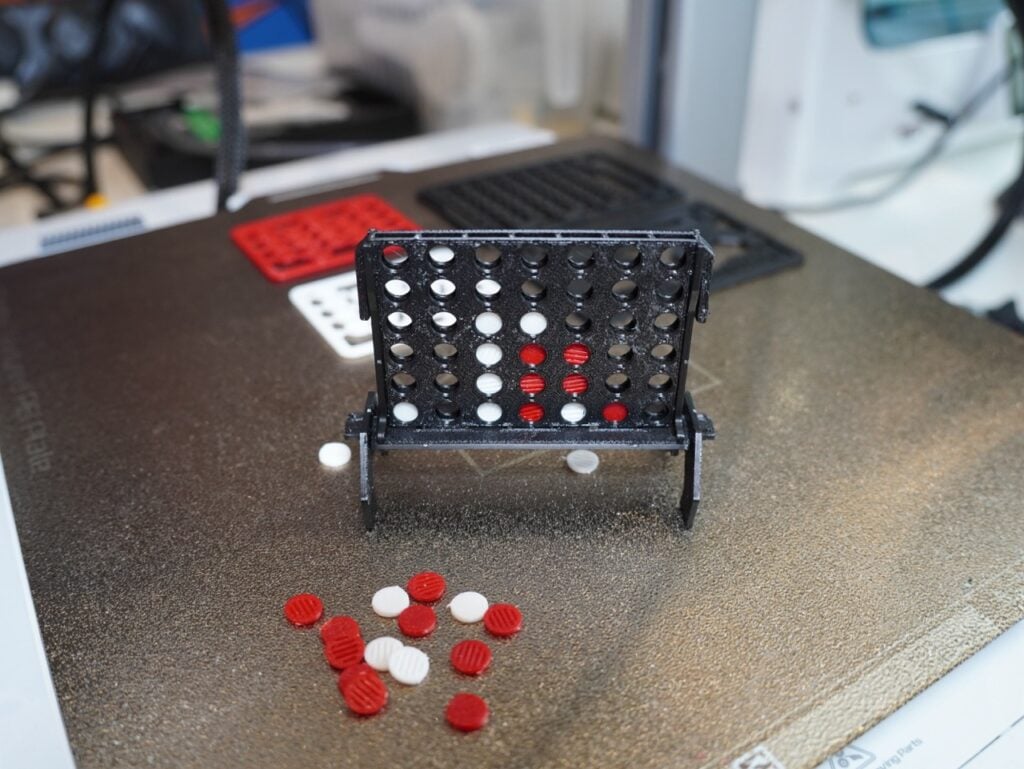
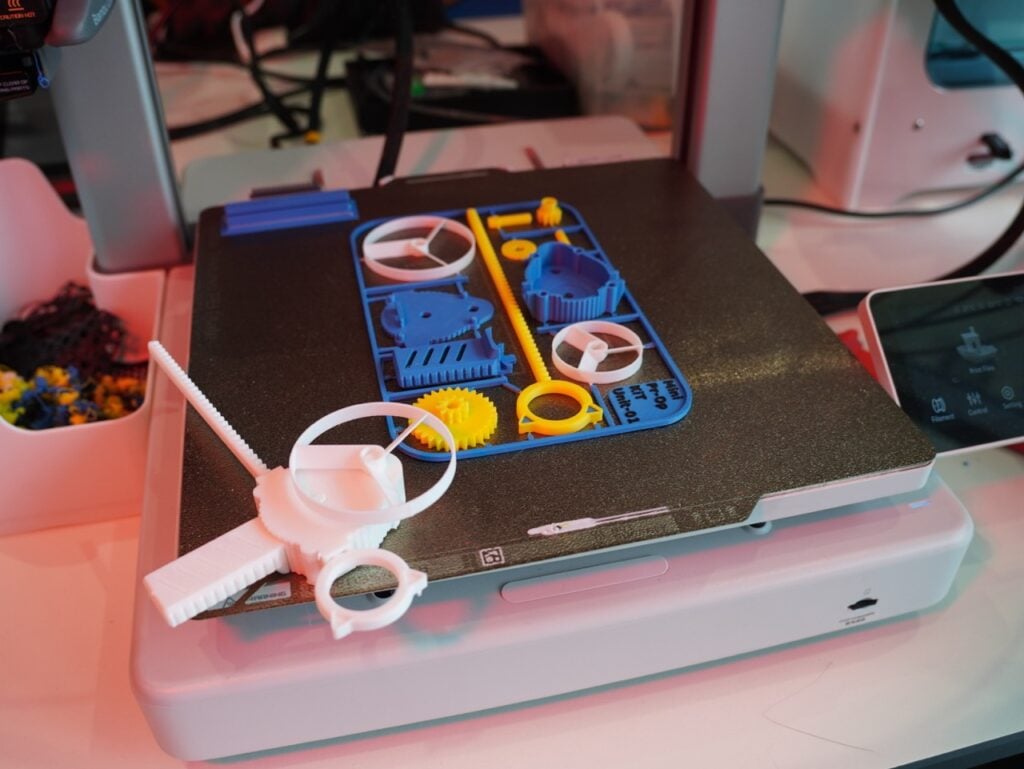
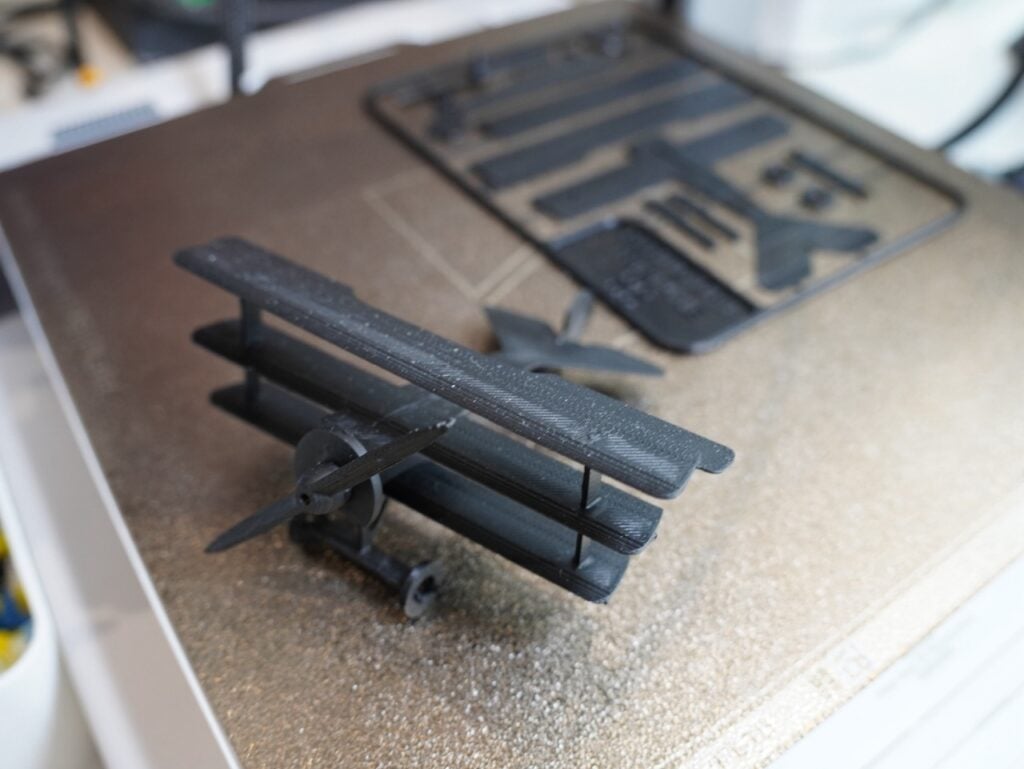
Our Maker in Chief has a new feature in Raspberry Pi Official Magazine, and it’s all about the nifty things he 3D-prints in the lab here at Pi Towers. In this first article, he shares three designs that would make excellent nostalgic gifts.
If you grew up with Airfix kits, you’ll remember the joy (and frustration) of glue-covered fingers and tiny paint pots. Those retro models are still around today, but Kit Cards bring the same sense of excitement without the mess. Pop out the parts, snap them together, and you’ve got instant fun! If your 3D printer can handle multiple colours, the results look like they’ve leapt straight out of the box.
They capture what 3D printing is all about, turning imagination into reality. They’re small enough to slip in a wallet, yet big enough to deliver the joy of building something with your own hands. Whether it’s a toy, a puzzle, or even a functional mechanism, Kit Cards remind us that sometimes the best projects don’t need to be big, just really clever.
All three of these were printed with PLA on a Bambu Lab A1. An elastic band can be used to make the Triplane fly – mine crashed. The classic game of Connect Four is a lot of fun and the flying ‘thingy’ works surprisingly well!
Christmas is just around the corner, so these would make great stocking fillers. Now, what to design that includes a Raspberry Pi?
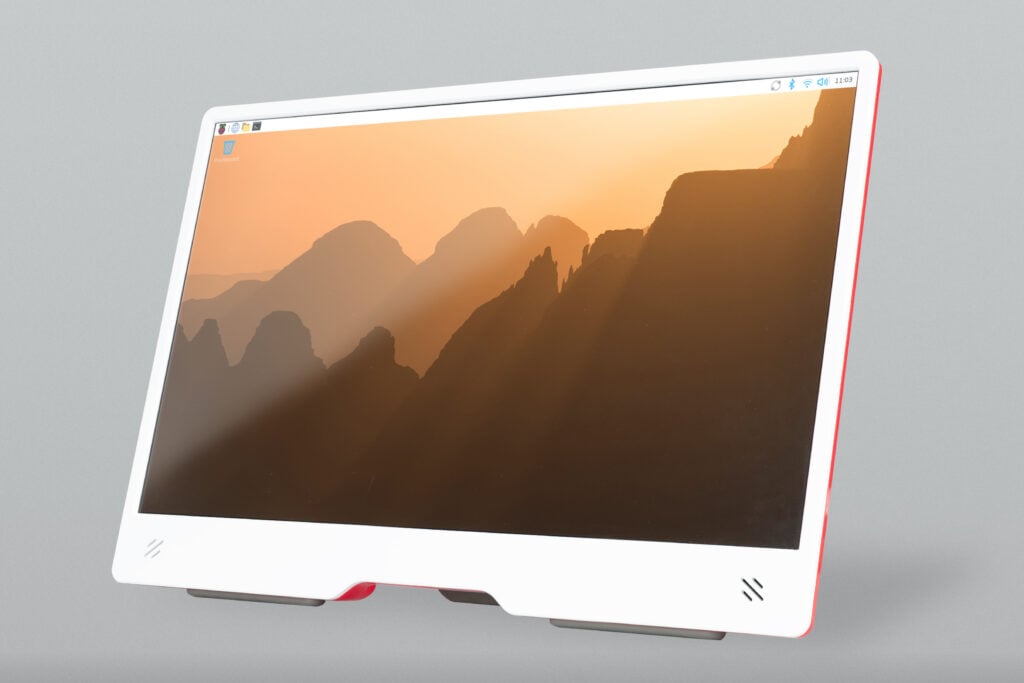
A couple of weeks ago, we released the Trixie version of Raspberry Pi OS. One of the changes we made was to revamp the Bookshelf application to give contributors access to subscriber-only titles, so we thought we’d talk a bit more about that decision.
Some time back, we made a change to how our e-books were distributed. Originally, we made all the PDFs of our books available for free on the day they were released, but in 2023 we began expanding the distribution of our print and electronic titles. Before then, our only third-party distribution was through resellers and booksellers in the UK and Ireland. We were entirely absent from e-book channels like Kindle, Google Play Books, and Apple Books, and our print titles were not reliably available from online or retail bookstore channels; when they were, they were typically marked up substantially by third-party sellers.
Ooooh, pretty new Trixie desktop
When we started selling e-books, free versions would only become available after a new edition was released. However, we maintained the same Creative Commons licence (CC BY-NC-SA), so in theory, anyone who obtained an e-book could share it and read it on any device they desired. Unfortunately, certain e-book platforms began making it more difficult to extract assets from books you’ve purchased. To address that problem while avoiding conflict with the channels where we sell e-books, we’ve instituted two ways you can get DRM-free e-books.
We’ll get to the second way in a bit, but first, anyone who makes a contribution of £5/€5/$5 a month is eligible to download not only PDFs from our books website but also ePUB versions, which are more suitable for e-book readers. Recurring contributors will also get early access to Raspberry Pi Official Magazine PDFs, three weeks before they are made freely available to all. If you signed up for early access to the magazine at £3/€3/$3, you’ll have access to both book and magazine PDFs at that rate — unless you cancel your recurring contribution.
What does this mean for Bookshelf?
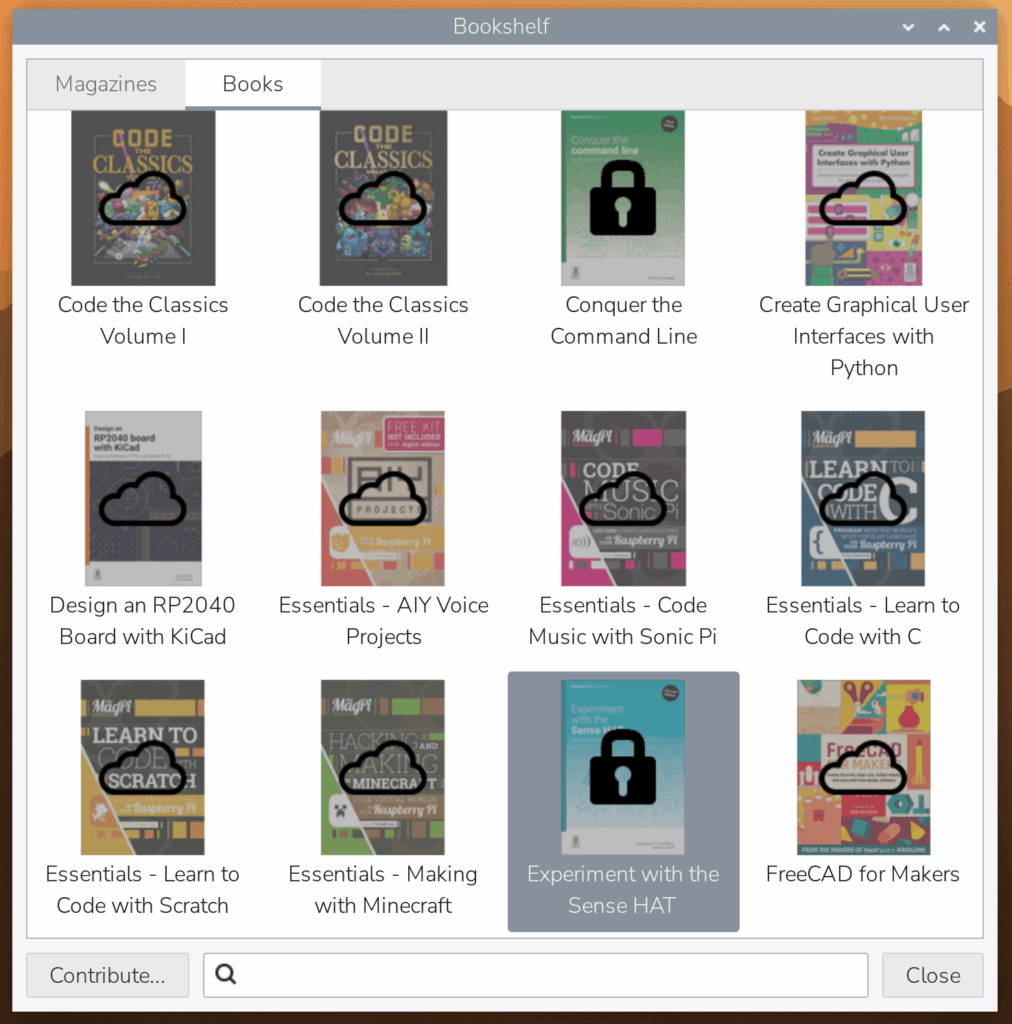
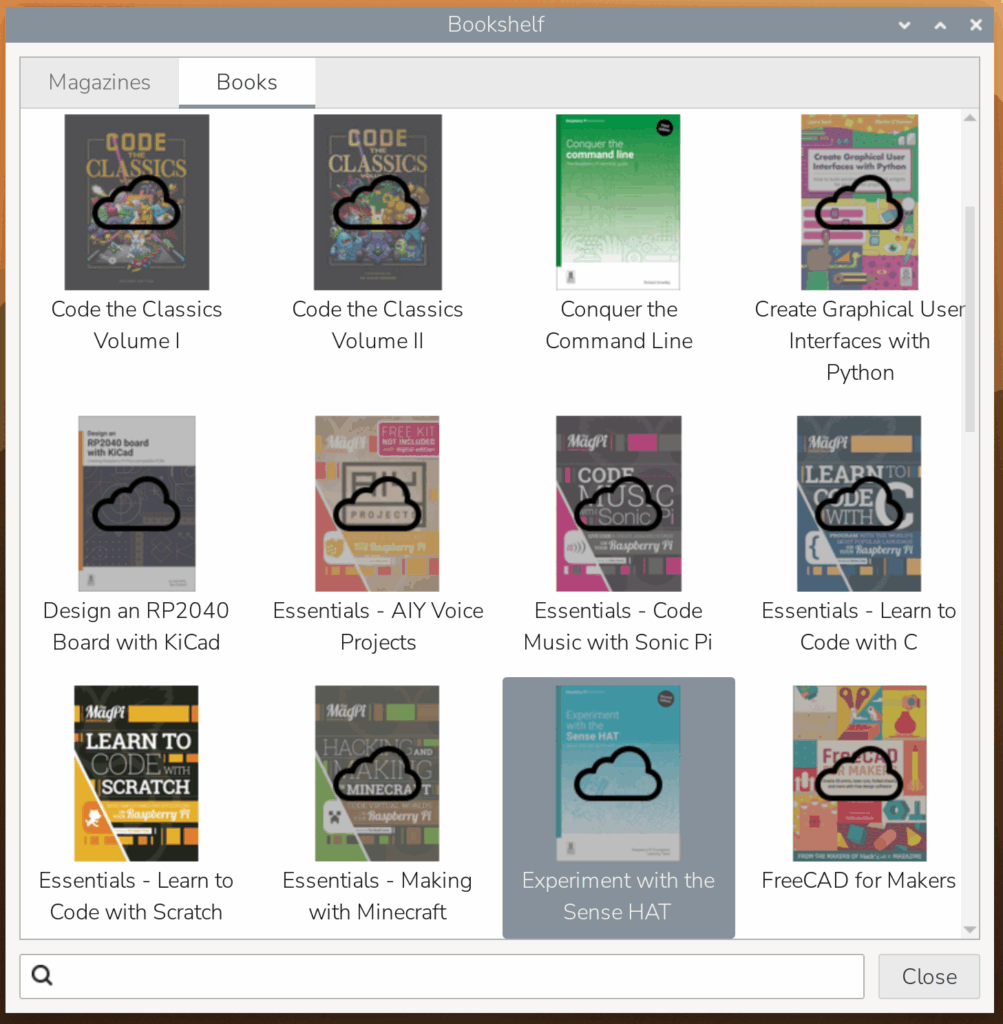
Previously, we only showed free titles in Bookshelf, all of which could be downloaded by anyone. Now we show both free titles — which are still available to everyone — and contributor-only titles, which can only be downloaded by contributors.
When you first start Bookshelf, free titles are indicated with a cloud icon, as before, and can be downloaded and viewed by double-clicking. Contributor-only titles are indicated with a padlock icon, and if you try to double-click one of these, you will be notified that it is only for contributors.
In order to unlock these titles, you will need to set up a contributor account. Click the ‘Contribute…’ button at the bottom left of the window to open the contributor pages on the Raspberry Pi website.
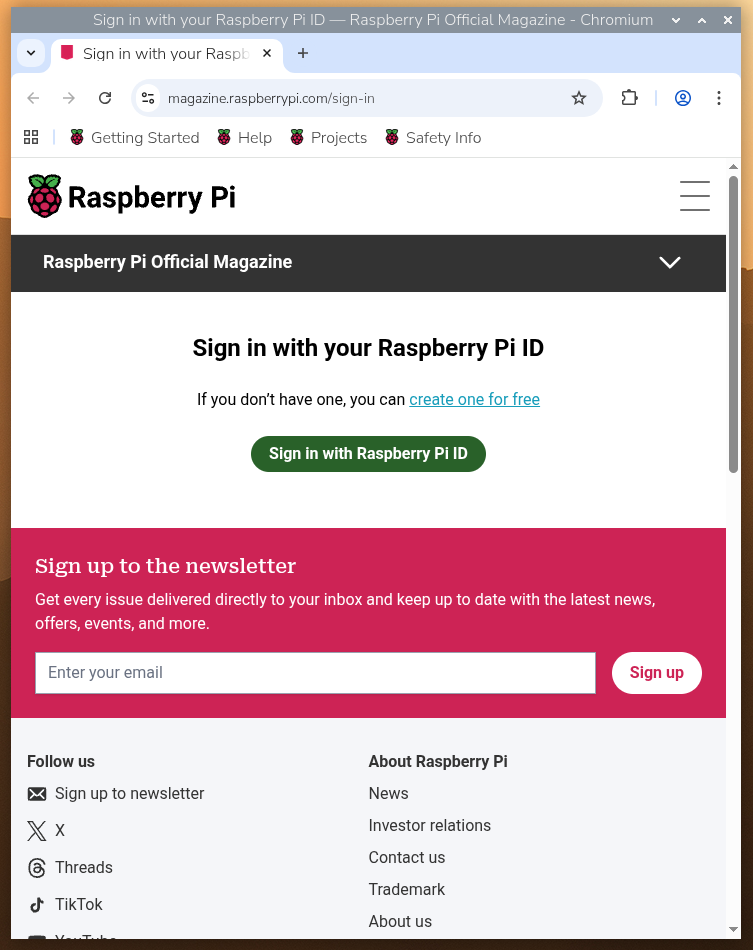
Contributions are linked to a Raspberry Pi ID, so you will need to set up one of these — if you are already using Raspberry Pi Connect, you can use the same ID, in which case you can simply log in with your existing username and password.
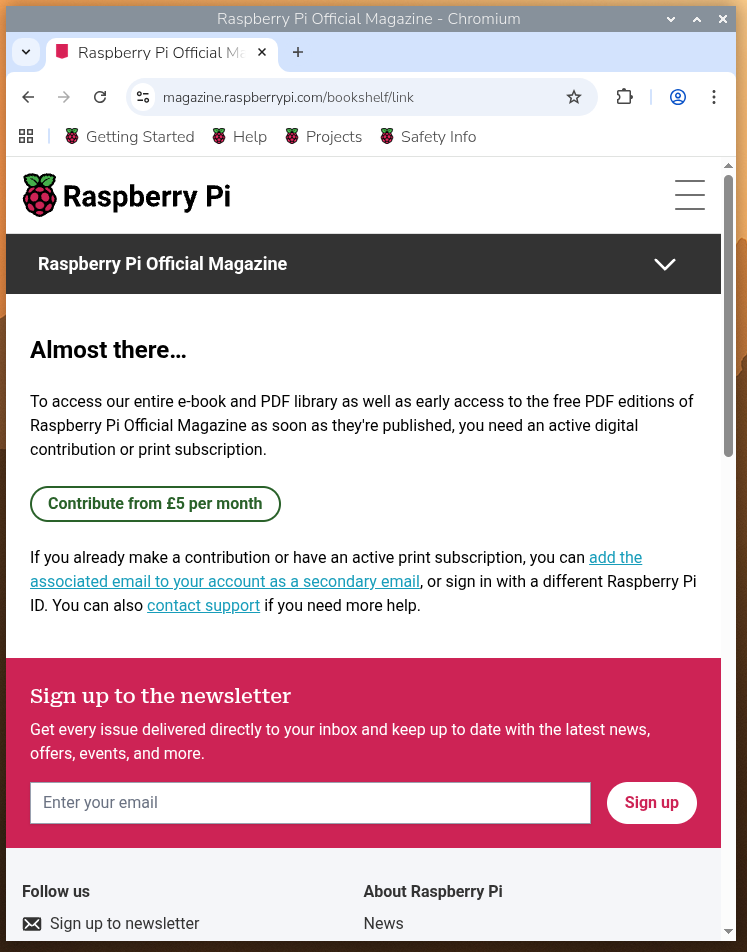
Once you have set up your ID, you will be asked to set up contributions associated with that ID.
After you have associated your contributions with your Raspberry Pi ID, the page will prompt you to ‘Sign in to Bookshelf’.
Clicking this link will open Bookshelf and store your ID, identifying you as a contributor. You will now see that the ‘Contribute…’ button has been removed, and titles which were previously marked with padlocks can now be downloaded.
Even if you stop your contribution, you retain access to the titles that you have already downloaded — the PDFs are stored in the Bookshelf folder of your home directory, and will continue to appear in Bookshelf as titles you can double-click to open. (But you won’t be able to download them again without a new contribution, so don’t lose them!)
If you move to a new Raspberry Pi or flash a new OS image, you can just log in again with your contributor details and your titles will be unlocked on that Raspberry Pi as well. As long as you remain a contributor, you can access your contributor-only titles on as many Raspberry Pis as you want.
The second way we’re improving the accessibility of our e-books is by gradually making all of our titles free to download in Bookshelf. Just as the latest issue of the magazine is contributor-only for the first month and thereafter becomes free to all users, contributor-only books will also become free for all Bookshelf users several months after the e-book goes on sale worldwide. For those who download our e-books directly from our website, older editions will become free after a new edition is published, but all e-books will be accessible to those who make a qualifying recurring contribution.
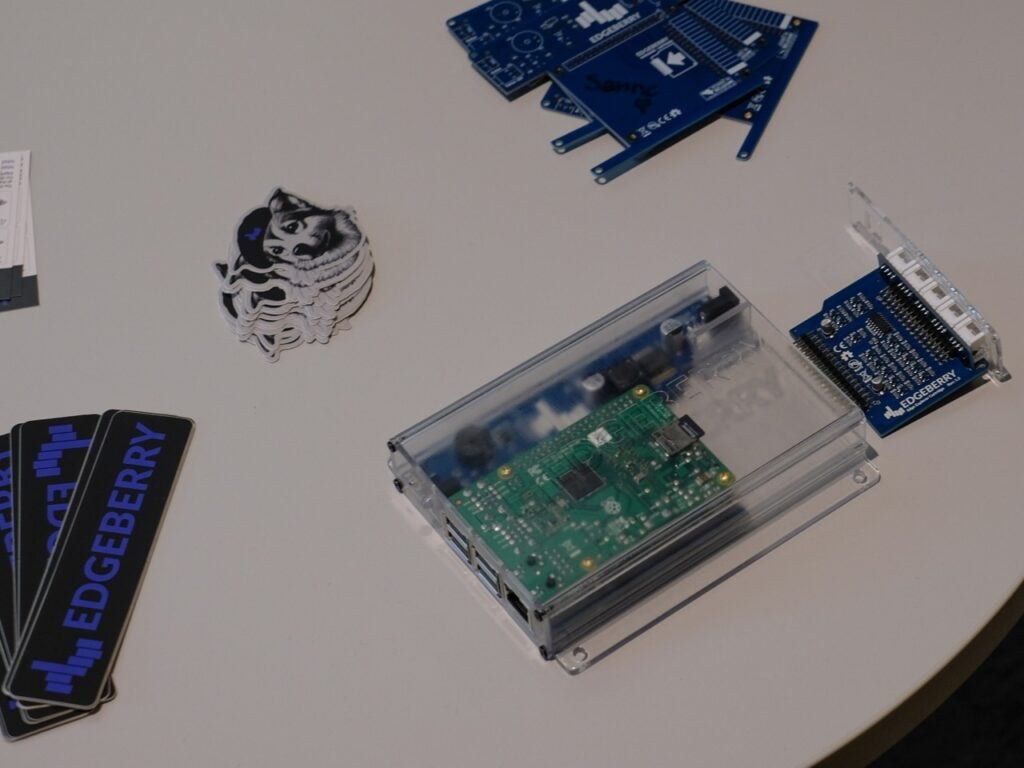
Happy #MakerMonday to you all. This week, we’re celebrating by showing you another intriguing build from the pages of Raspberry Pi Official Magazine. Edgeberry is a modular expansion system that turns your Raspberry Pi into a robust, adaptable Internet of Things (IoT) edge device.
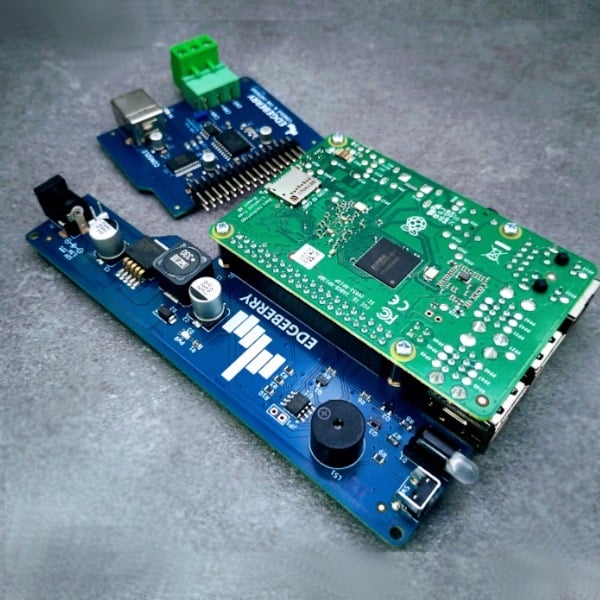
The main board is attached to the Raspberry Pi to add a simple set of extra features; the expansion cards are then slotted in as and when you need them
A lot of Raspberry Pi projects come to us after someone decided they couldn’t get the right parts for their own personal project, as… well… they didn’t exist. Sanne Santens’ impetus for her project was not much different.
“Edgeberry is the result of many years of throwing Raspberry Pi [computers] all over the place, literally, with all kinds of sensors, actuators, etc. glued to them, with custom-designed enclosures for protection or integration in its environment,” Sanne says. “I found myself basically redoing substantial parts of the system over and over — but just with small [variations]: making robust power solutions, mounting Raspberry Pi [boards] in boxes, wiring up interface boards, debugging flaky connections, writing device management features in an online dashboard.”
After noticing the commonalities between the devices she had been building, Sanne decided to create her own custom expansion board that combined them all together. “Edgeberry, to me, is the solid building plate/foundation on which I build my IoT ideas,” Sanne explains.
IoT development
This foundation became something Sanne believes can be helpful to many kinds of Raspberry Pi users.
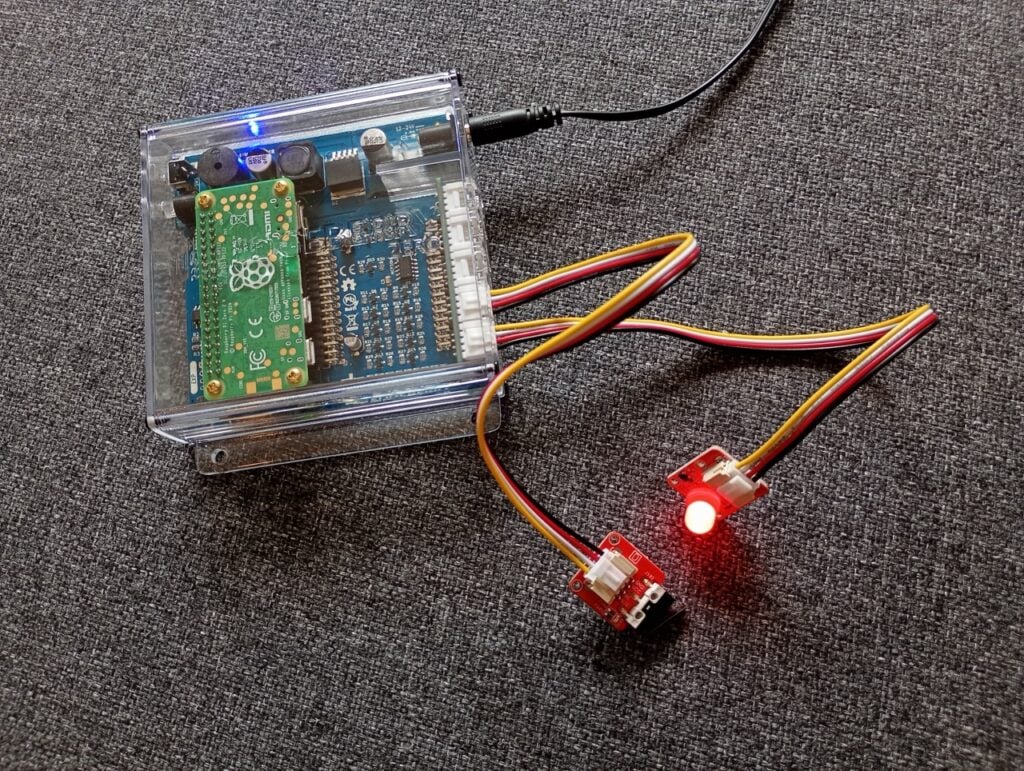
“It’s a modular expansion system that turns Raspberry Pi into a robust, adaptable IoT edge device,” Sanne tells us. “It combines a custom HAT-style board, a robust 3D-printable enclosure, built-in user interface elements (like a status LED and buzzer), and a flexible hardware cartridge slot for application-specific electronics (leaving most of Raspberry Pi’s beloved I/O pins intact). Edgeberry simplifies the messy part of getting from prototype to real-world deployment for trying out (and iterating on) an idea, providing you with a stable, repeatable base you can trust… It’s meant for anyone who wants to build connected devices that work reliably outside the lab environment.”
Edgeberry is quite compact, even when the expansion cards are added
It’s all open source too, available on GitHub, so if you need to add more hardware yourself, you can use the KiCad template provided.
Real-world uses
“Edgeberry is already powering real deployments,” Sanne says. “It is, for example, the foundation of the Freya Vivarium Control System. It’s also been adopted in R&D environments where engineers need to quickly test ideas without worrying about power supplies, mounting, or reliability. It also has been tested in the classroom environment to give students hands-on experience with IoT concepts, without the fragility of breadboards and jumper wires. It fits wherever you need Raspberry Pi to cross into the physical world — cleanly and confidently. And I expect lots more applications to build on it in the future (even if just because I’m using it myself now, for everything).”
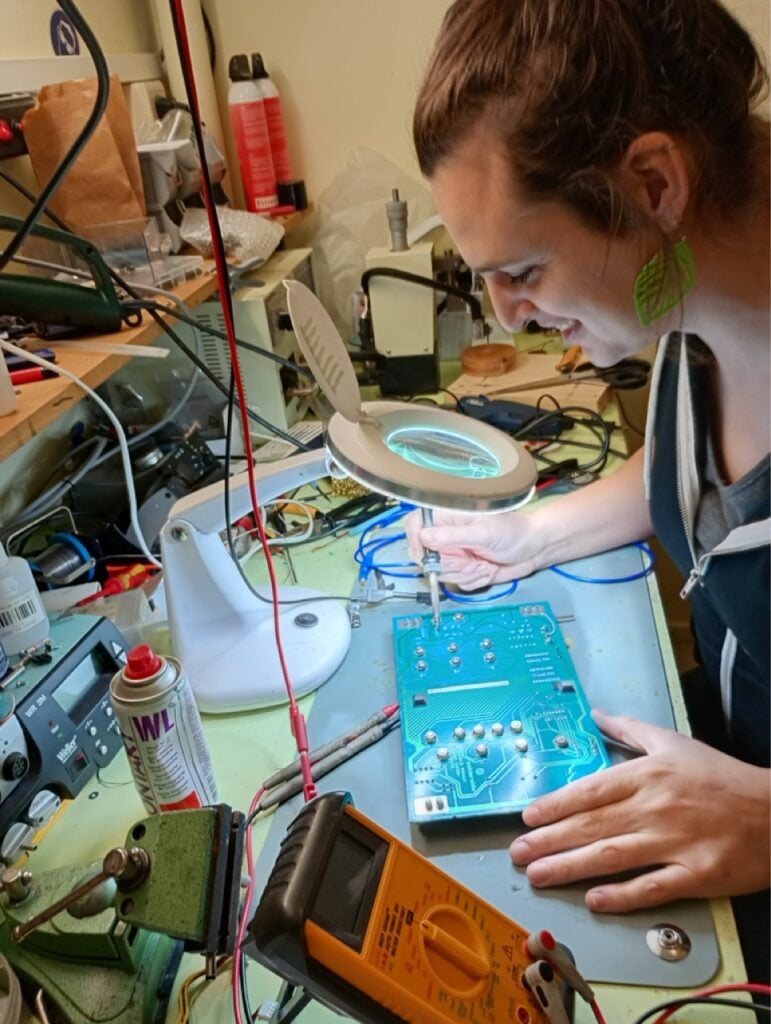
Edgeberry creator Sanne Satens in her happy place, soldering and working on PCBs
If you don’t want to make an Edgeberry yourself, various kits are available from Elecrow, with some extra cartridges too.
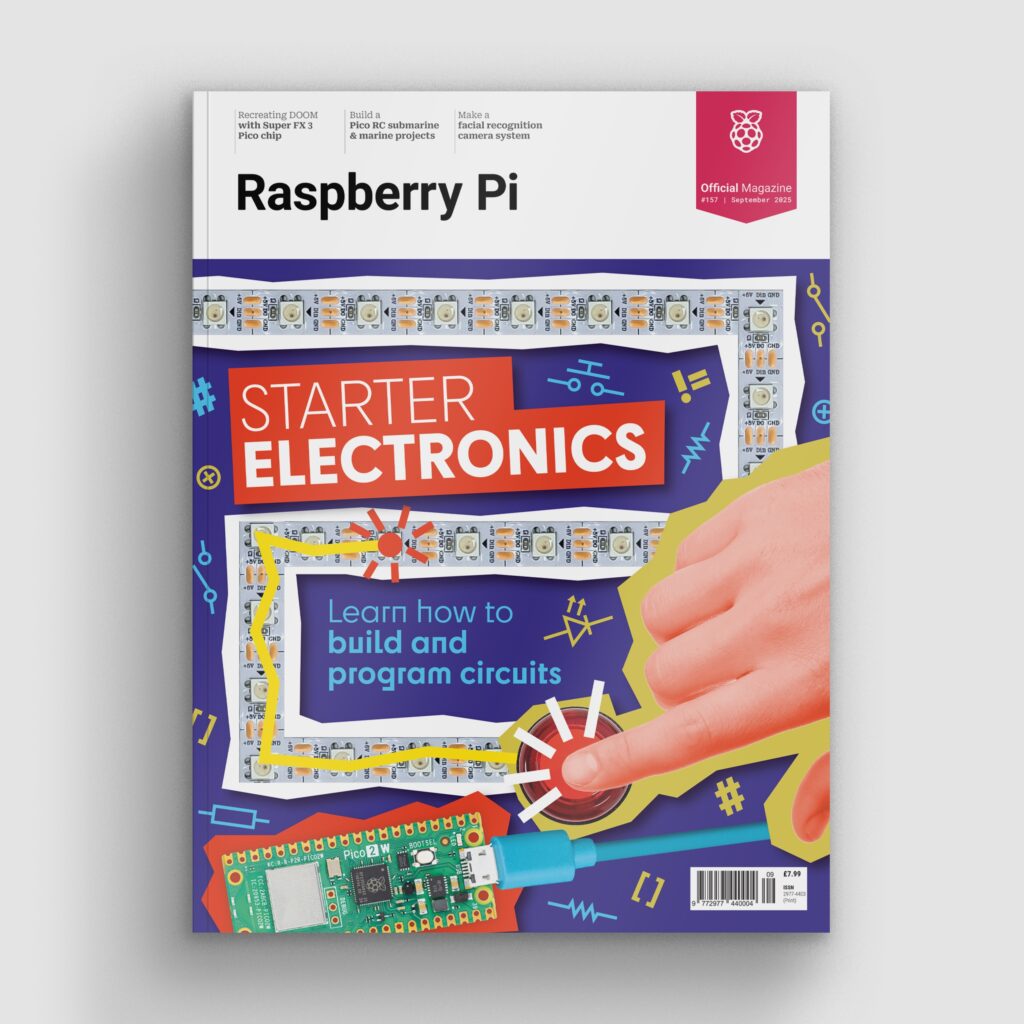
Raspberry Pi Official Magazine #157
You can grab this issue from Tesco, Sainsbury’s, Asda, WHSmith, and other newsagents, including the Raspberry Pi Store in Cambridge. It’s also available from our online store, which ships around the world. And you can get a digital version via our app on Android or iOS.
You can also subscribe to the print version of our magazine. Not only do we deliver worldwide, but people who sign up to the six- or twelve-month print subscription get a FREE Raspberry Pi Pico 2 W!
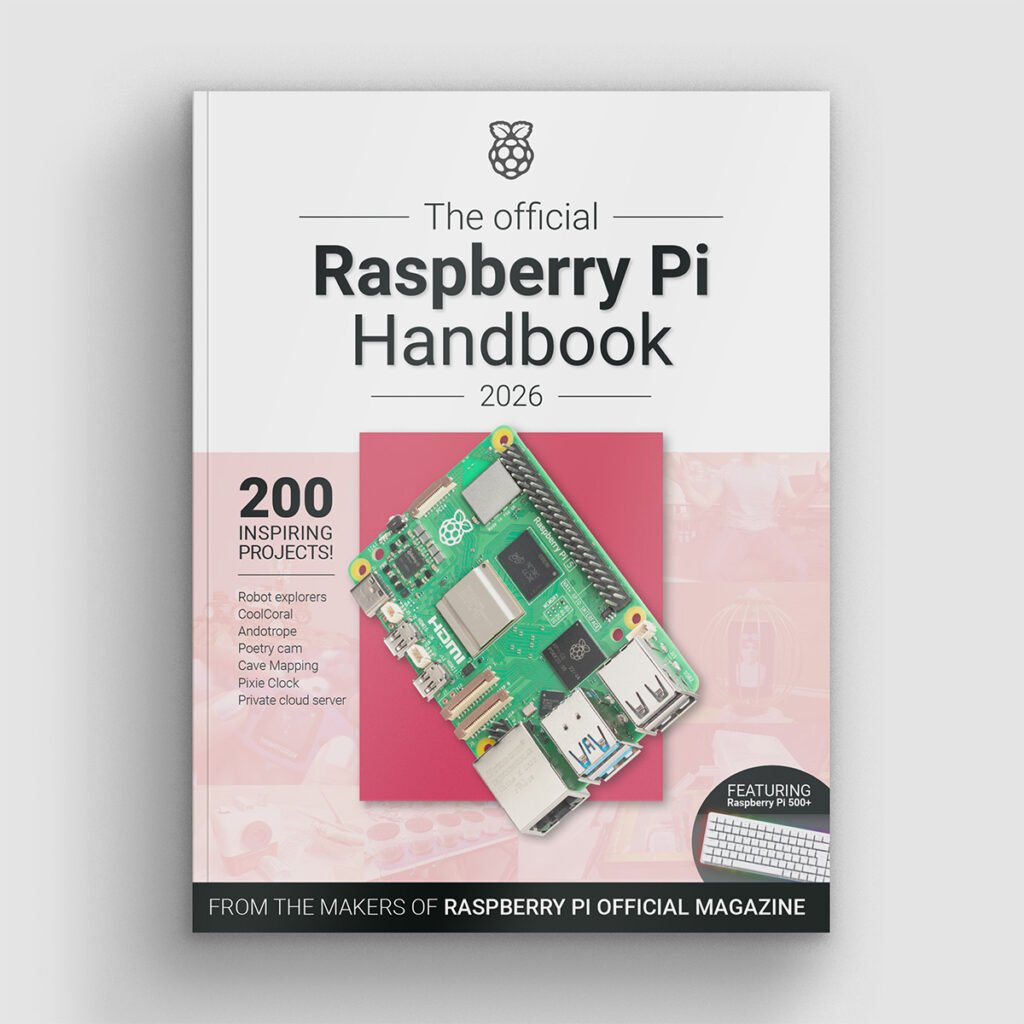
As the air gets colder and the nights grow longer, that can only mean one thing: it’s time for a new version of The Official Raspberry Pi Handbook! The brand-new 2026 edition is out now, just in time to slip into a lucky someone’s Christmas stocking.
The cover has had a refresh
A refreshing change
You may notice that the cover looks a bit different from the past few editions — this is to bring it in line with the new look of Raspberry Pi Official Magazine. If you’re not a fan of change, though, rest assured that the articles in this year’s book still maintain the original design from The MagPi.
Speaking of which, we once again did our very best to squeeze as many incredible projects, builds, and reviews into the 200 pages as we could. While that is a lot of pages, we always have so much great stuff to choose from, so it’s never an easy task. I think we got an excellent balance of articles for every interest and skill level, though.
From big builds to small projects, we have inspiration for all
Raspberry Pi 500+ revealed
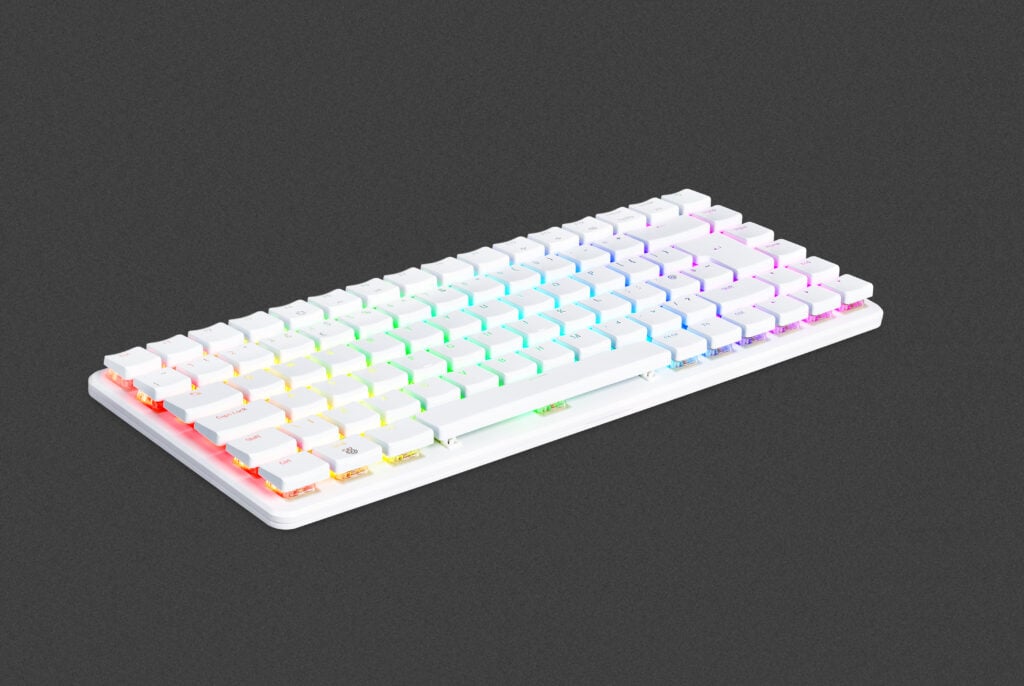
You’ll find everything you need to know about the latest and greatest Raspberry Pi release — Raspberry Pi 500+, which came out just two weeks ago. With all the important specs and a tinkering guide, it’s the perfect primer for the ultimate Raspberry Pi computer. We also included a quick-start guide for every other Raspberry Pi model.
The beautiful new Raspberry Pi 500+
Projects to inspire
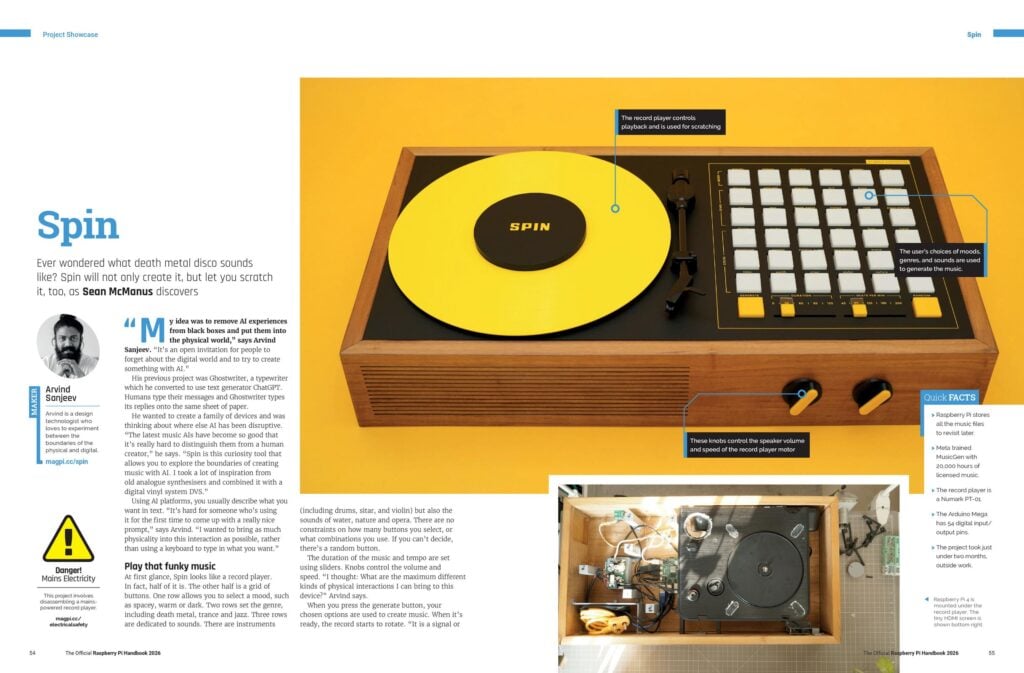
If you’re looking for some new ideas for a Raspberry Pi or Pico project, look no further! From robots to golf, and from clocks to conservation, there’s a huge number of projects from creators around the world to read about. Maybe they’ll inspire you to make something incredible yourself and be featured in the next handbook!
The ultimate retro handheld can play more than Sonic the Hedgehog 3 if you want it to
Guiding your every step
We’ve also featured several of our in-depth tutorials to help you build your own projects, including media players, gaming handhelds, robots, cloud servers, and more. We pride ourselves on our guides, and I think our special on playing retro horror games straight from a Raspberry Pi 5 is a great look into native emulation via DOSBox.
Get it today!
The Official Raspberry Pi Handbook 2026 is out right now, and you can grab it in stores or online from our own store for just £14.
If you’ve ever wished your Raspberry Pi projects could see faster, smarter, and with far less power, we’ve found something you might like. Event-based vision systems specialists Prophesee have launched the GenX320 Starter Kit for Raspberry Pi 5, bringing their neuromorphic (inspired by the structure and function of the human brain) sensing technology to the Raspberry Pi developer community for the first time.
Unlike traditional cameras that capture full frames at fixed intervals, event-based sensors continuously detect changes in brightness, known as ‘events’, with each pixel activating independently and asynchronously. This makes sensors much faster (we’re talking response times of microseconds), more energy-efficient, and capable of operating with much less data and processing power than traditional sensors.
This neuromorphic approach enables vision applications to operate in a similar fashion to how humans capture and process visual information. As with the human eye, event-based vision processes information when it detects a change in the scene — an event. If nothing changes, the sensor doesn’t report anything. This allows both humans and event-based sensors to collect all the information they need without wasting time and energy reprocessing images of the unchanging parts of the scene.
This results in highly efficient real-time vision that’s perfect for machines in industrial automation, robotics, security, and other edge applications where every millisecond counts.
The kit
The GenX320 Starter Kit is built around the Prophesee GenX320 sensor, the smallest and most power-efficient event-based vision sensor available, with a resolution of 320×320, a dynamic range of >140 dB, and an event rate equivalent to ~10,000 FPS. The sensor’s power draw is <50 mW.
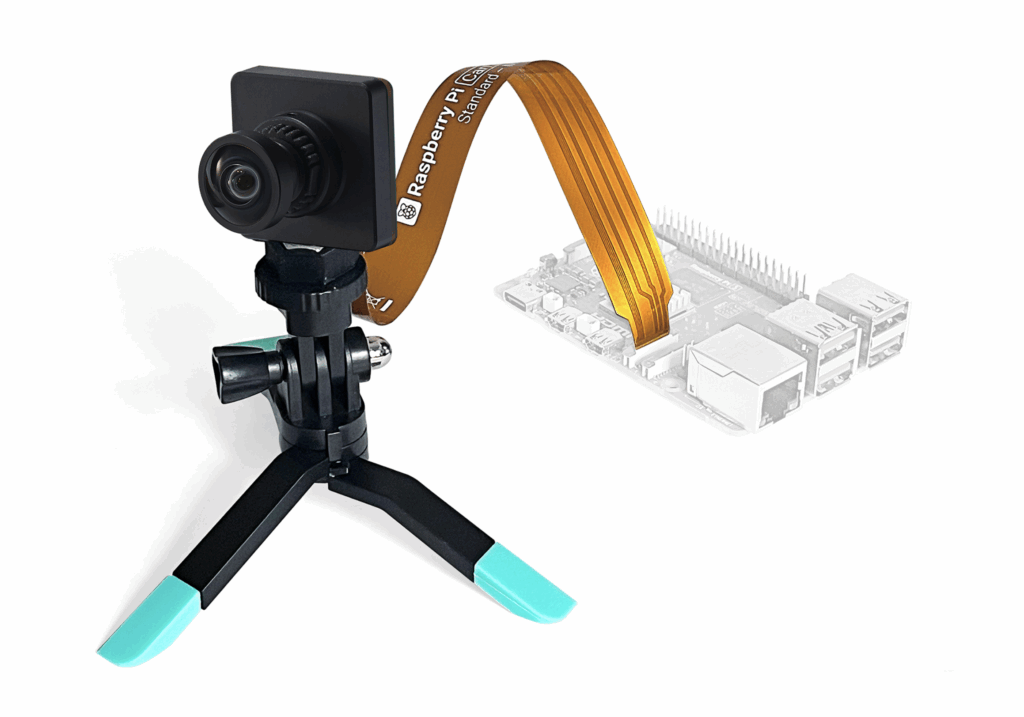
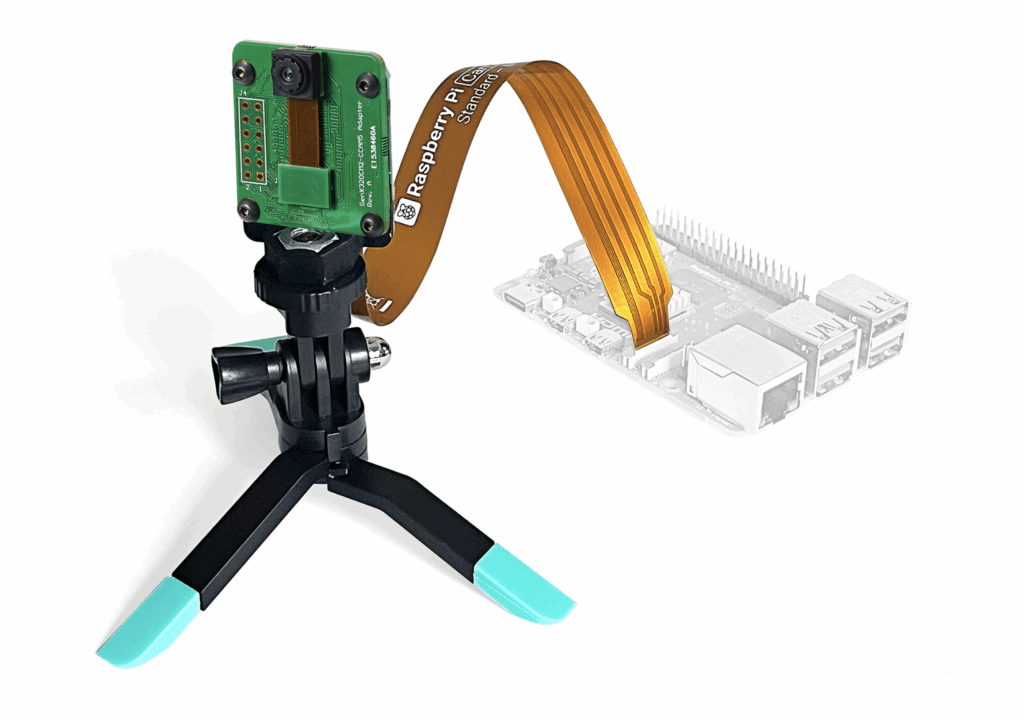
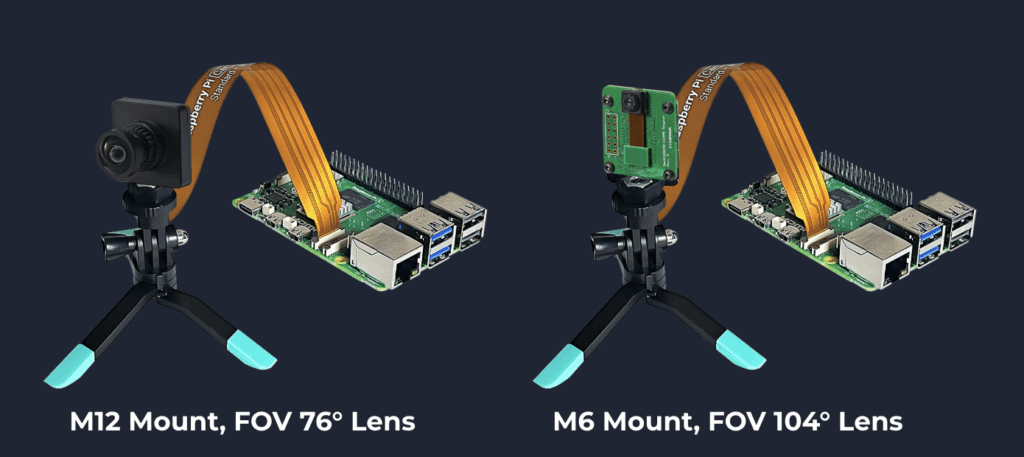
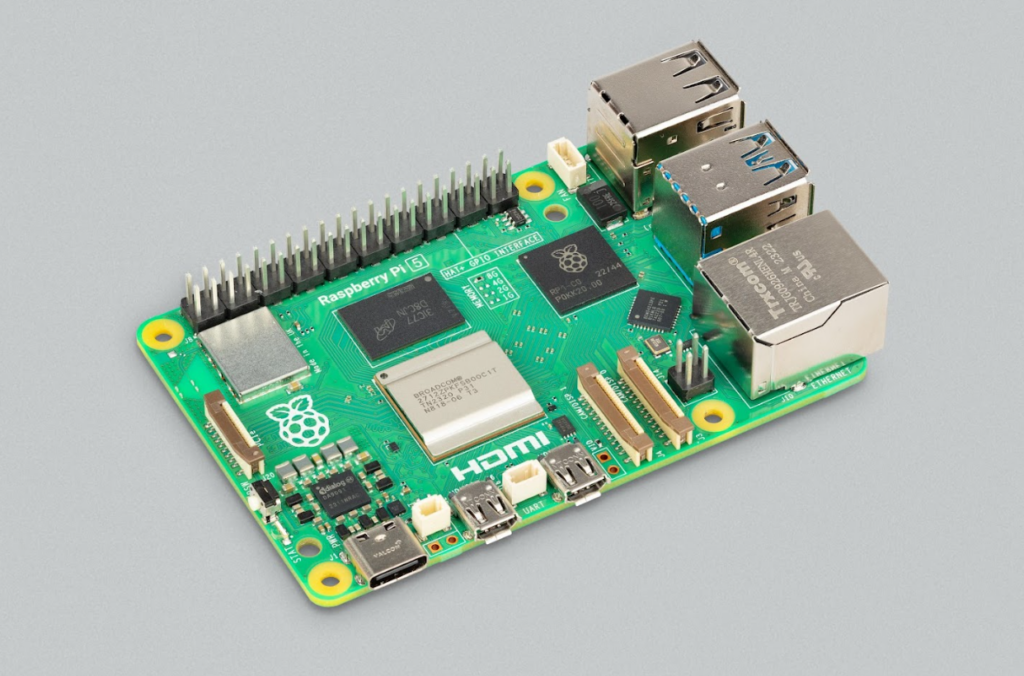
The kit comprises the Prophesee GenX320 sensor and a compact, mounted event-based camera module with a MIPI CSI-2 interface that connects directly to Raspberry Pi 5 (board sold separately). Each kit ships with a mini tripod, so there’s no need to fashion your own supports — just screw the kit directly onto the mount and get started.
Choose between two variants:
M12 mount, FOV 76° lens
M6 mount, FOV 104° lens
Developer resources
Prophesee has made dedicated drivers, as well as data recording, replay, and visualisation tools, available to developers on GitHub.
Users will also have access to the Prophesee Knowledge Center, where they can find user guides, FAQs, and a download repository. There’s also a community forum to share ideas.
Prophesee’s event-based vision is a natural fit for projects where frame-based cameras may struggle — things like tracking a drone’s flight, classifying and avoiding obstacles in robotics, or detecting falls and intrusions with safety cameras. It also has applications in industrial IoT, where ultra-fast frame rate processing can help detect defects on production lines before they become costly.