Gehn Imager Andotrope | The MagPi #144
Replicating a beloved display from a favourite game yielded amazing results for one Raspberry Pi maker, discovers Rosie Hattersley.
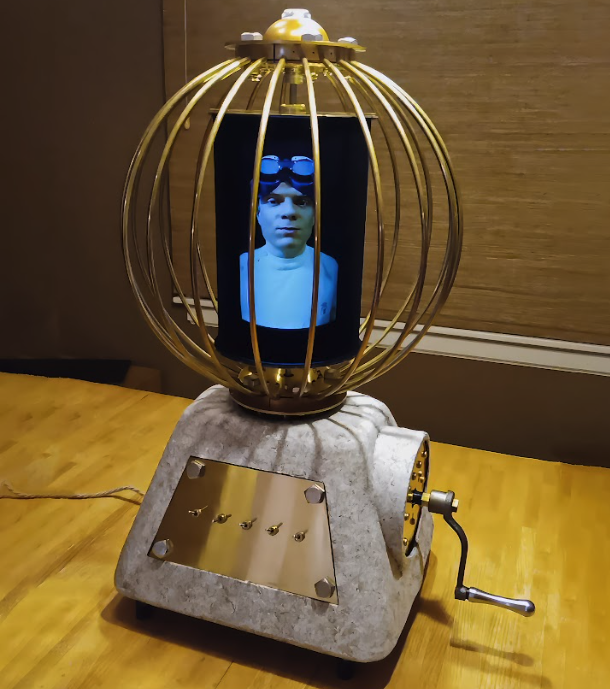
Mike Ando loves making things in his spare time, and uses a Raspberry Pi “because they’re so easy and save me time implementing things”. Even so, he’s just spent eight months designing his own take on Gehn’s holographic imager from the game Riven, the sequel to puzzle adventure Myst. As well as displaying images and playing video clips, it can be used for video calls and games. “Basically, I’ve brought a 150-year-old children’s toy into the 21st century.” Actually, the Australian systems administrator has created two such ‘andotropes’. The second version uses Pico W which is much smaller and cheaper and doesn’t use so much expensive and heavy brass, but The MagPi was especially taken with his original, Raspberry Pi 3 model which requires no CGI or other visual trickery and uses two back to back 10in tablets
New tricks
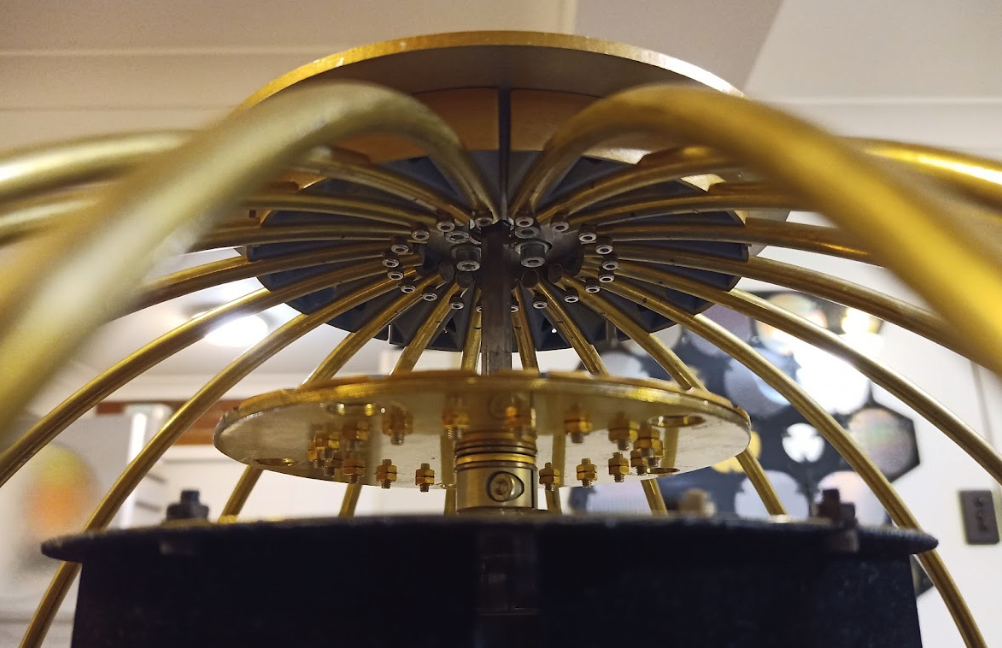
If ‘andotrope’ sounds unfamiliar, that’s because it is a word Mike coined, having almost by chance ended up creating a new form of display. His hologram-like display sits inside a spherical cage constructed from around 12m (40ft) of 6mm brass tube. “It doesn’t quite meet the definition of a zoetrope, and because I couldn’t find anyone else who successfully pulled this off before, I’m calling any display you could build that’s similar to this by the generic term ‘andotrope’”.

The whole imager is actually 60% scale of the original in-game one. “The original was just impractically large and everyone who has seen it in-person (including the game’s creators) thinks my one is the right size and big enough,” explains Mike. His confident stance is not easily merited: Mike is a self-taught maker and IT specialist who drives a DeLorean to maker events where his take on Myst’s linking book has gone down a storm.
Mike had not made anything with Raspberry Pi before, but it seemed ideal for the andotrope because he “needed a small, powerful computer with a lot of capabilities. Something that can blink lights on and off very well wouldn’t cut it for this project. An Arduino or ESP32 microcontroller just isn’t powerful enough, and a full desktop x86 computer would be such a hassle”. Raspberry Pi is used as a central computer to act as the master control device – the main hub that controls and synchronises everything. It handles the user input and the local Wi-Fi network, it communicates to the tablets via MQTT, it manages the Arduino Pro Mini motor controller and DFRobot DRI0042 motor driver, and it plays back the audio. “I’m quite impressed with how much it can manage simultaneously!” says Mike.

Mike used ChatGPT as the starting point for his code, manually editing it, “fixing the edge cases” and expanding its scope. He then focused on finessing the displays so the two tablets were synchronised and phone photos and videos looked good. There were also tweaks to the andotrope’s rotational speed and adjustments to the width of the viewing slit to improve the illusion of movement.
Brassed off
“Brass is a beautiful metal but I find it a pain to work with,” says Mike. Designing and creating a means to securely hold all the brass rods in place was “a major headache”, and the andotrope mechanism was also a challenge. “It’s not that hard to get one of those displays working, but it’s a lot of effort to get it working well.”
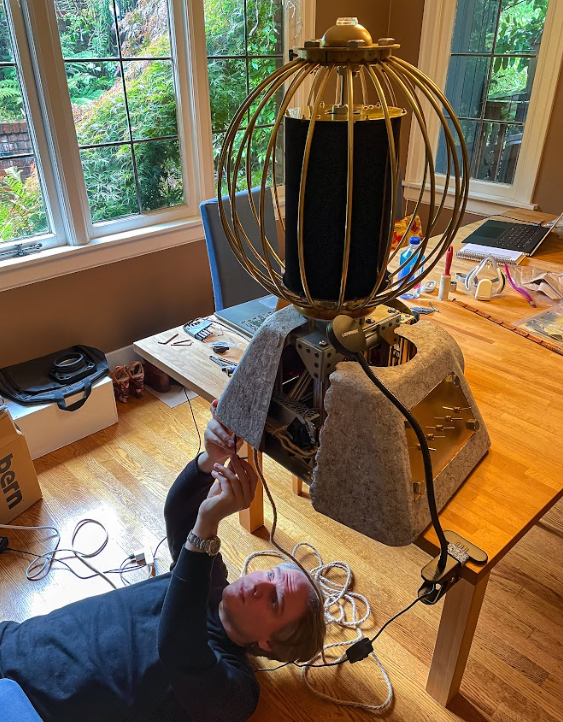
The andotrope project ended up “pretty expensive thanks to all that brass!” Mike notes that the brass sphere alone was around $700. The 10in Android tablets he chose were also pricey, but use very little power when sitting idle and “happily last a full nine hours of constant playing at a convention with battery life to spare,” which he finds pretty amazing.
There are a lot of different uses for the Andotrope display – everything from a personal digital assistant (Siri/Alexa) display to a teleconferencing system to playing board games with friends. Anyone trying to create their own should use a phone or a tablet with zero flicker to its video, as any flicker at all will show up at high rotational speeds.
The MagPi #144 out NOW!
You can grab the new issue right now from Tesco, Sainsbury’s, Asda, WHSmith, and other newsagents, including the Raspberry Pi Store in Cambridge. It’s also available at our online store which ships around the world. You can also get it via our app on Android or iOS.

You can also subscribe to the print version of The MagPi. Not only do we deliver it globally, but people who sign up to the six- or twelve-month print subscription get a FREE Raspberry Pi Pico W!
The post Gehn Imager Andotrope | The MagPi #144 appeared first on Raspberry Pi.
from News - Raspberry Pi https://ift.tt/VmH0sQy
Labels: IFTTT, News - Raspberry Pi

0 Comments:
Post a Comment
Subscribe to Post Comments [Atom]
<< Home