Retro Pico-powered incandescent lamp
You won’t be surprised to learn that our engineers’ desks are covered in gadgets and gubbins. One particularly beautiful object caught our eye recently. Turns out it was handmade by one of our ASIC engineers, Dave Bell, so we asked him to tell us how he did it.
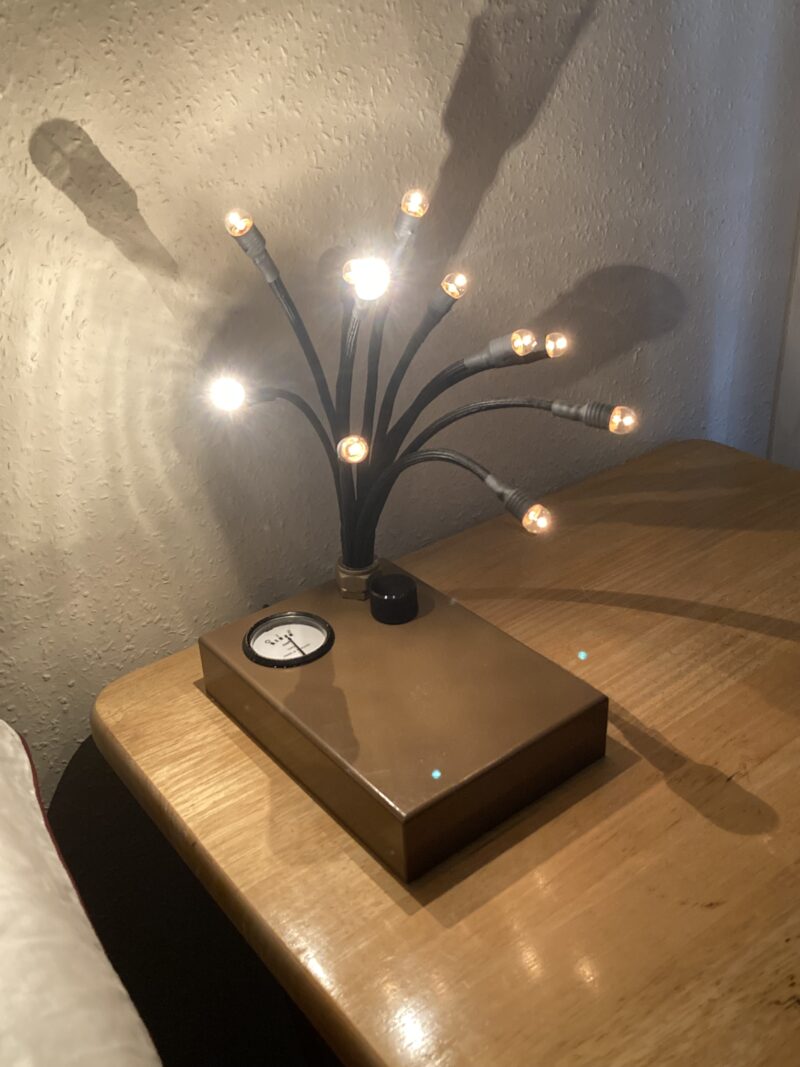
What’s better than a retro dimmable incandescent bedside lamp? A Raspberry Pi Pico-based retro dimmable incandescent bedside lamp! Over the last year or so I’ve been working on a lamp with a Raspberry Pi Pico at its core. The goal was to make a steampunkesque bedside lamp that would be bright enough to read by. Armed with a handful of miniature light bulbs of the sort found in secondary school physics labs and an impulse-bought analogue ammeter, I booted up KiCad and began drawing up a design.
My first piece of hardware design was here at Pi Towers, back when I was an intern. The circuit design for this lamp is in many ways a reference to the first board I worked on, which was full of relays to enable automated testing of RP2040’s GPIOs. Using the same type of reed relays, I put together a PCB that could toggle the 5V power to twelve (later reduced to eleven) incandescent light bulbs, all controlled by a Pico, which takes input from a potentiometer and converts it into a signal to trigger the relays.
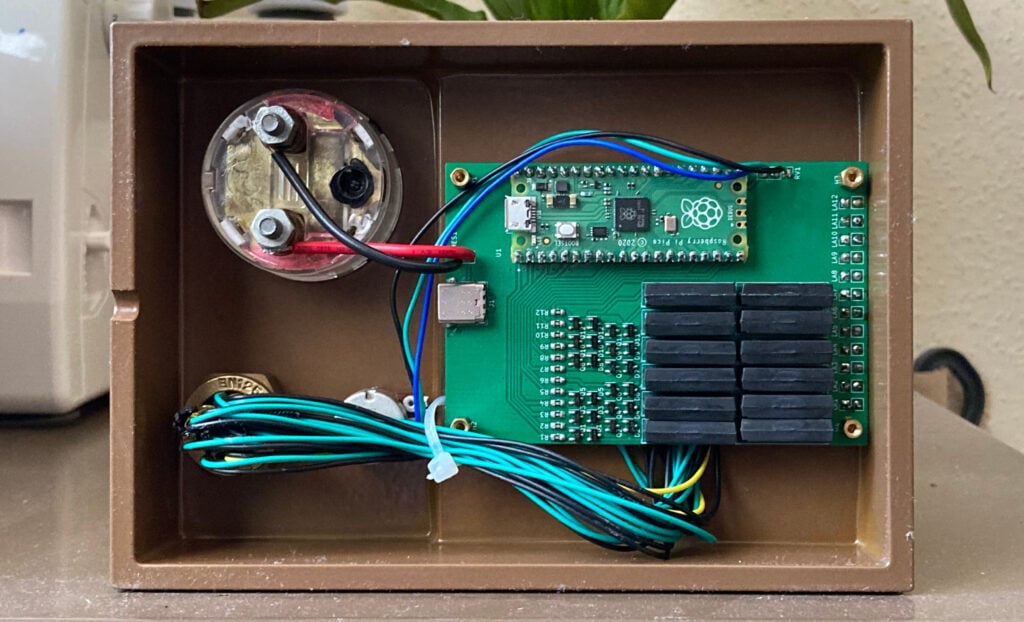
Circuit board assembled, the next challenge was to build the base. Initially, I wanted to put something together using my woodworking skills. After remembering that I didn’t have any, I changed tack and turned to Fusion360 to draw up a prototype. One prototype turned into three, with our Maker in Residence, Toby, 3D printing each one, and providing me with advice on how to refine the design at each stage. Once everything fitted and I was happy with the overall look, I sent my CAD file off to get it CNC-machined in aluminium so that the finished product would have a bit of weight and a premium feel.
Finally, the last thing to do was to create the stalks atop which the bulbs sit. Each stalk has a brass rod at its core to which the light bulb’s bottom contact is soldered, along with a couple of wires to complete the circuit. I covered each rod and wire assembly with some parachute cord to keep everything tidy, and some heat shrink to give a more finished look to the top off the stalks.
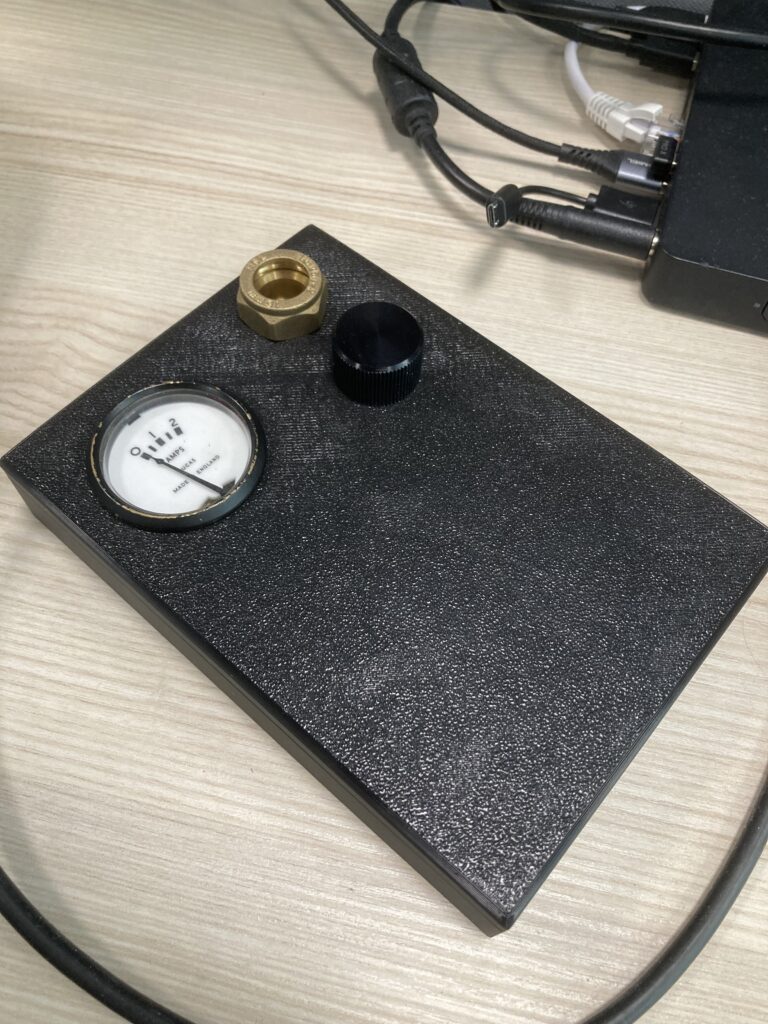
With the body of the lamp complete, I loaded a simple MicroPython script onto the Pico to convert the ADC values fed from the potentiometer into GPIO signals to the relays. The great thing about using a Pico is that the lamp can easily be upgraded to be smart by switching in a Raspberry Pi Pico W. For now, I take an oddly immense amount of pleasure just from turning the knob on the potentiometer and watching the dial on the ammeter swing up as the light bulbs spring to life. A perfectly steampunky and functional decoration for my desk.
The post Retro Pico-powered incandescent lamp appeared first on Raspberry Pi.
from News - Raspberry Pi https://ift.tt/F2fQl5H
Labels: IFTTT, News - Raspberry Pi

0 Comments:
Post a Comment
Subscribe to Post Comments [Atom]
<< Home