Beige is back: Remembering the BBC Micro with Raspberry Pi 500+
The BBC Microcomputer System, or BBC Micro, taught a generation how to use personal computers. Raspberry Pi exists partly because of that legacy. Our CEO and co-founder Eben Upton’s own journey began with a Beeb, and when he recently floated the idea of making a Raspberry Pi 500+ look like a BBC Micro, it felt less like a gimmick and more like a polite nod to four decades of British computing.
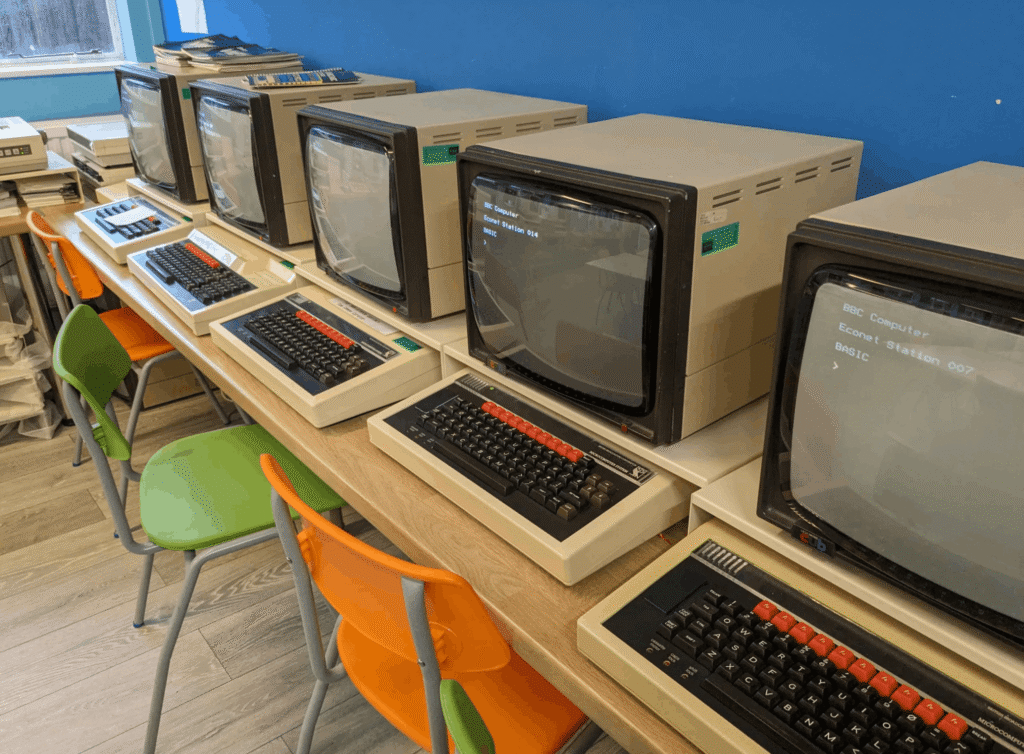
The BBC Micro was released in 1981. Manufactured by Acorn Computers, it had an 8-bit CPU running at 2MHz, and came in two main variants: the 16KB Model A, initially priced at £299, and the more popular 32KB Model B, priced at £399. According to the Bank of England’s inflation calculator, Model B would set you back something in the region of £1600 today. So, it was expensive to say the least. Despite this, it went on to sell over 1.5 million units, and was found in almost every UK school at the time. The BBC Micro’s entire memory could comfortably fit inside a modern emoji, but at the time it felt revolutionary, offering up a whole new world to the masses.
Back to BASICs
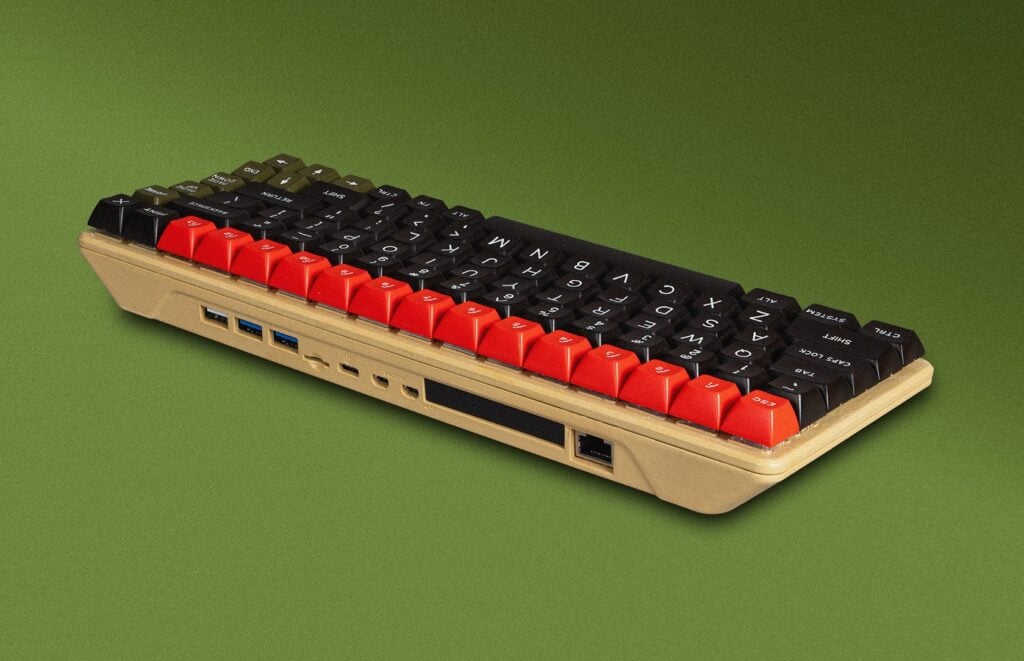
Within minutes of starting the makeover, I discovered that beige spray paint is unsurprisingly not very popular anymore — especially this exact shade, which reminds me of nicotine-stained pub wallpaper. A couple of purchases later, I found one that just about did the job. After a quick disassembly of a Raspberry Pi 500+ (which is designed to be taken apart so you can upgrade the SSD), a coat of primer, and a top coat of RAL 1001 Beige enamel spray paint, we had the base of our imitation Micro.
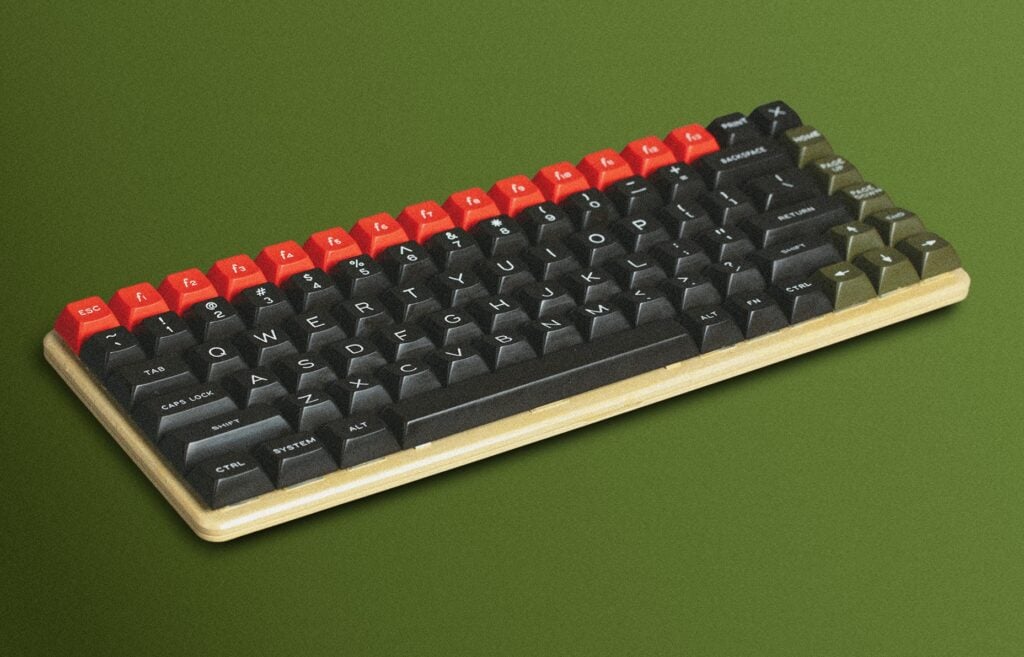
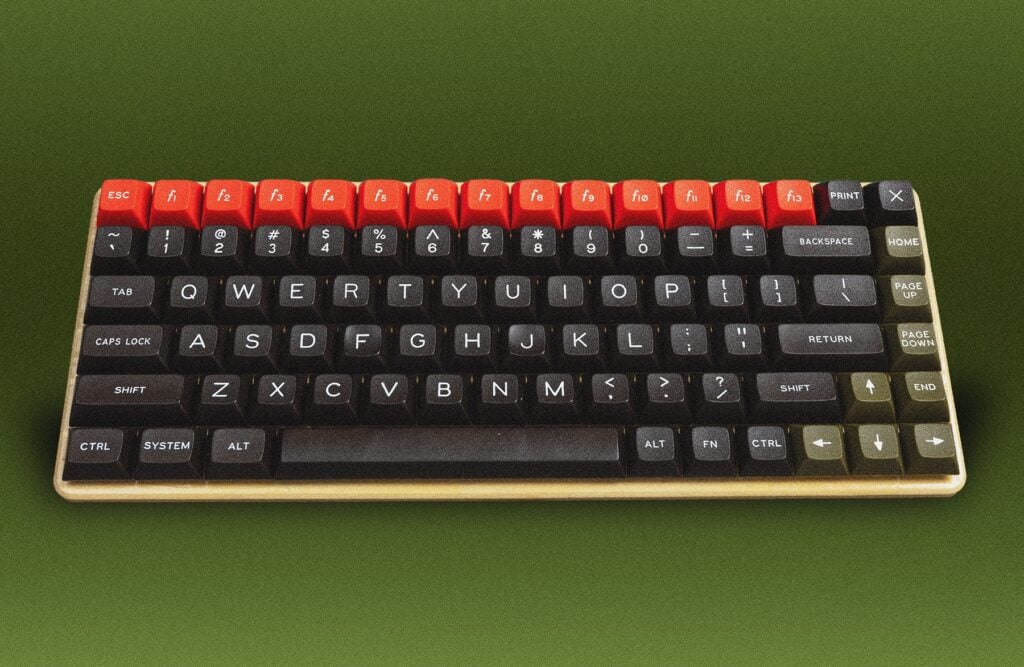
But that old-school beige was not the classic computer’s only distinguishing feature; the BBC Micro also had a very distinctive set of keycaps. For those above a certain age, the keyboard is instantly recognisable — mostly for its bright red function keys, which seem to cry out “we do something powerful”. In practice, they were programmable macros for BBC BASIC commands (RUN, LIST, etc.), and their vibrant colour made them feel special, almost like hardware buttons rather than just keys.
Because Raspberry Pi 500+ was built with customisation in mind, recreating this look was easy; the keycaps could easily be swapped out using the removal tool included with every purchase. Signature Plastics LLC offer a variety of unique, high-quality keycaps, and they certainly delivered on our request for this project. Within minutes, the transformation was complete. My hat respectfully doffed to an iconic British computer that introduced millions of people to computing.
Microcomputer, major impact
Raspberry Pi’s all-in-one PCs have always been inspired by the home computers of the 1980s, and much like the classics, they help put high-performance, programmable computers into the hands of people all over the world.
Raspberry Pi 500+ is our most premium product yet, giving you a quad-core 2.4GHz processor, 16GB of memory, 256GB of solid-state storage, modern graphics and networking, and a complete Linux desktop, all built into a beautiful mechanical keyboard. In 1981, this would have represented more raw processing power than every BBC Micro in a typical school combined. In simple terms, it delivers computing on an entirely different scale: around a million times more processing power, well over half a million times more memory, and several million times more storage. Not bad for the price of a routine car service — before they “find something”, anyway…
The post Beige is back: Remembering the BBC Micro with Raspberry Pi 500+ appeared first on Raspberry Pi.
from News - Raspberry Pi https://ift.tt/a26ZBAY
Labels: News - Raspberry Pi, IFTTT

0 Comments:
Post a Comment
Subscribe to Post Comments [Atom]
<< Home