Meet the organiser of one of the longest-running Raspberry Pi community events
An automation engineer discovered the joy of quick prototyping on Raspberry Pi, leading him to organise one of the longest-running community events. This #MakerMonday, we meet Richard Kirby, the Raspberry Pi community member behind Raspberry Pint.
Automation is something a lot of Raspberry Pi enthusiasts are into, but this month’s subject, Richard Kirby, takes it to a whole other level: “My work time is consumed as a test manager at a multinational company that develops and deploys large railway automation systems throughout the world,” he tells us. “The system is largely automated, with signallers and train operators only intervening as needed — this includes automated driving of the trains.”
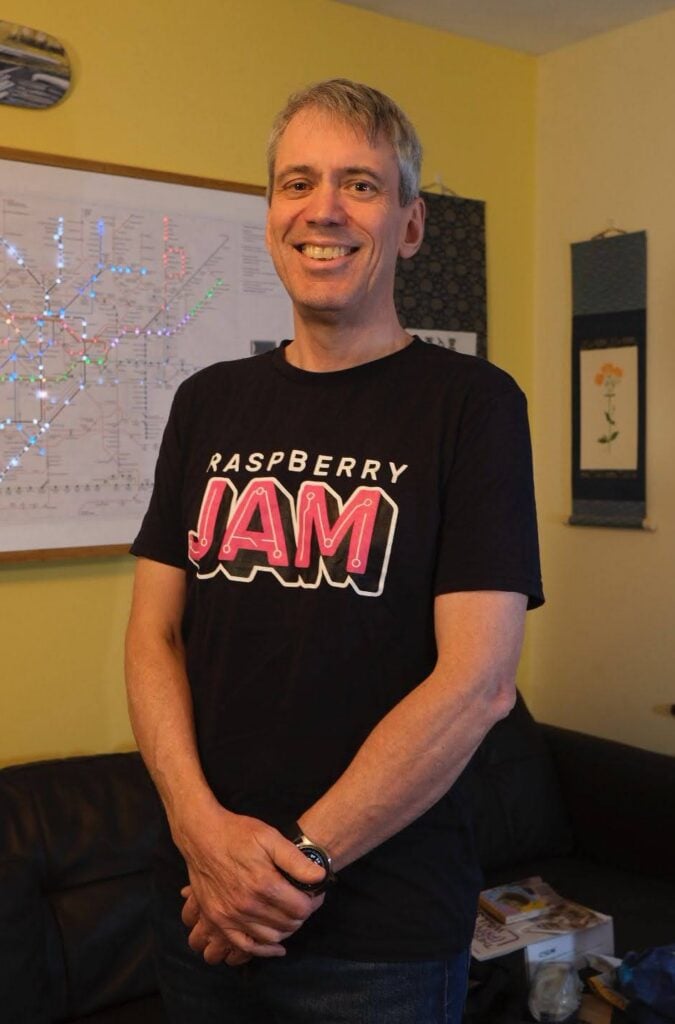
A lot of his work has involved the London Underground, and after moving to the city from Canada for a ‘two-year stint’ in 2009, he’s stuck around. His projects have been featured in Raspberry Pi Official Magazine before — Pi Fighter was a particular highlight — and he also organises the Raspberry Pint meetup in London.
What is your history with making?
In 2014, my daughter asked for a bit of help with a school project. She had decided to use a Raspberry Pi 1 Model B and was struggling with making it drive a DC motor. I was shocked at how quickly we sorted out a simple DC motor system. The DC motor spun a table tennis ball at different speeds using pulse-width modulation (PWM). The ball was then manually catapulted to measure the Magnus effect. I considered it a major victory, but was brought back down to earth when she complained we had no idea of the rotational speed. We ended up building a Raspberry Pi strobe to determine rotational speed; you increase the flashing frequency until the ball appears stationary. This was all over a weekend.
Needless to say, I got hooked on the pleasure of quickly building something with a Raspberry Pi, followed by spending ages making it more polished. It’s addictive to get a quick win, followed by a grind to make something good enough to tell others about. It keeps me sane after working on projects that are four to twelve years in duration.
How did Raspberry Pint start?
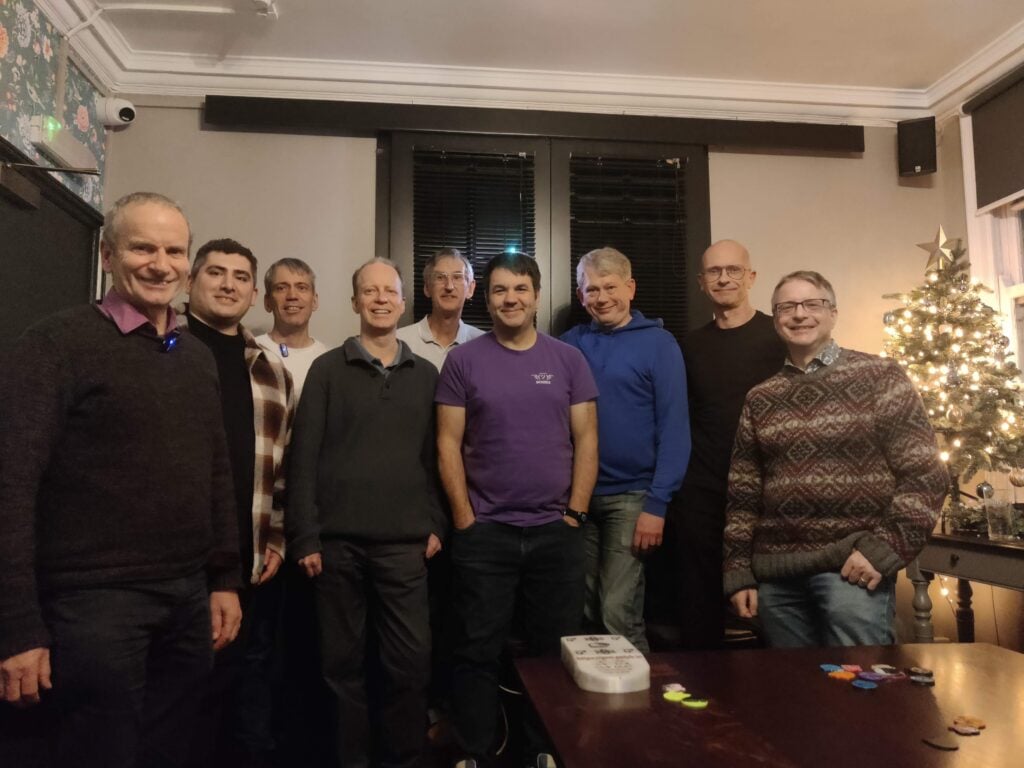
Matt Mapleston started Raspberry Pint in a London pub in 2013. I went to my first Pint in 2016 and took over organising the meetings in 2017. I wanted to make sure it wouldn’t fade to black — I had found my people! We have grown since the early days, from a handful of people to hybrid in-person and online meetups with between 30 and 80 people.
What are some of your favourite Raspberry Pint memories?
There is a lot of joy and fun at Raspberry Pint, as the format is makers telling everyone about their projects. The makers are excited and rightfully proud to explain their creations. We have had a lot of great local presentations of weird and wonderful projects. It’s a relaxed venue where the maker can tell their making story; all their trials and tribulations, eventually ending in sweet victory. Even highly accomplished people like the NASA engineers behind the ISS Mimic project were brimming with an obvious love for what they had built.
I never imagined a great community from around the world joining us to tell us about their experiences. Even the Australian and Japanese makers are getting up very early in the morning to tell us about their builds. It’s a fantastic way to spend a weeknight with a pint.
A key highlight was Eben Upton joining us for an informal discussion. He was relaxed and engaging, able to answer all the questions on a huge range of topics at a surprising level of detail — everything from detailed design decisions to the stock levels of Raspberry Pi 3B+ across the world. It was during the chip shortage, so it was a hot topic.
What are some of your favourite Raspberry Pi/Pico creations?
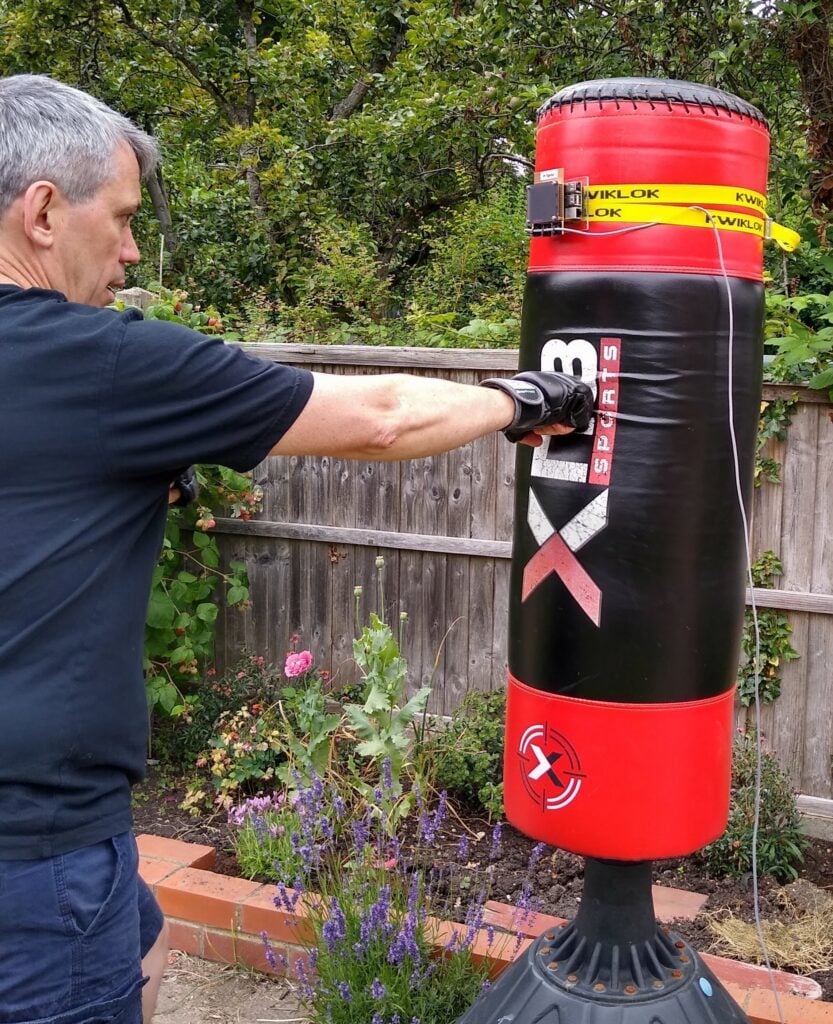
‘Pi Fighter‘, featured in The MagPi issue #85, is still a favourite of mine. It gamified heavy bag workouts. It still works, and was a big hit (and took big hits) at the Cambridge Raspberry Jams.
I still regularly use the ‘Talkative Tube Dashboard’ that was featured in The MagPi issue #120. It provides real-time statuses for the Tube lines. It’s a nice background for work video calls, as we can see railway problems in real time.
My current favourite is my ‘Diet Tracker’ project, which I’ve started using seriously again. It tracks what I eat and the amount of calories I consume. I have a fairly healthy lifestyle, but I needed some help improving my fitness. Naturally, this meant building something using Raspberry Pi. Two years later, I’m significantly healthier, and I’m now using it to get to the next level by further fine-tuning my food intake, closely monitoring protein, fat, and carbohydrates.
Issue 162 of Raspberry Pi Official Magazine is out now!
You can grab this issue from Tesco, Sainsbury’s, Asda, WHSmith, and other newsagents, including the Raspberry Pi Store in Cambridge. It’s also available from our online store, which ships around the world. And you can get a digital version via our app on Android or iOS.
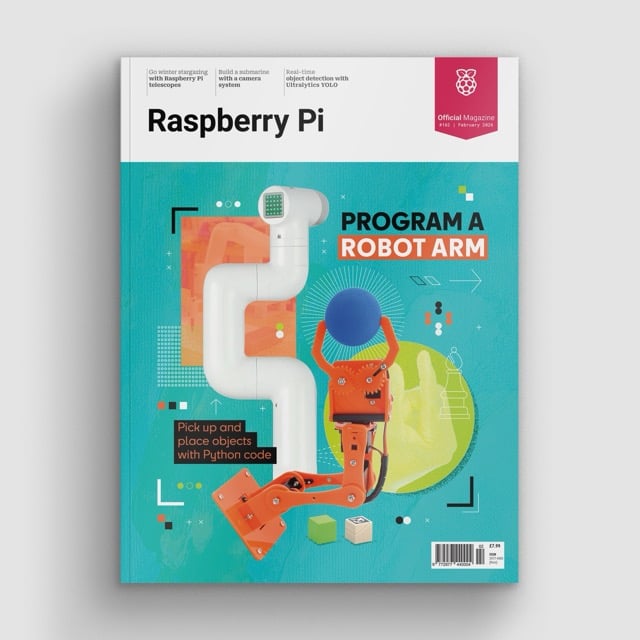
You can also subscribe to the print version of our magazine. Not only do we deliver worldwide, but people who sign up to the six- or twelve-month print subscription get a FREE Raspberry Pi Pico 2 W!
The post Meet the organiser of one of the longest-running Raspberry Pi community events appeared first on Raspberry Pi.
from News - Raspberry Pi https://ift.tt/MZCgL49
Labels: News - Raspberry Pi, IFTTT

0 Comments:
Post a Comment
Subscribe to Post Comments [Atom]
<< Home